

You have decided that affiliate marketing is your path. Smart move. But now comes the decision that quietly determines everything: which niche do you build in?
This guide was built specifically for beginners. Every niche below has been evaluated on the factors that matter most when you are starting from zero: barrier to entry, time to first commission, startup cost, and whether the income can compound over time.
We have also named specific affiliate programs with real commission rates and included documented, real-world site examples so you can see what the model actually produces.
How We Ranked These Niches for Beginners
Each niche is scored across five dimensions on a scale of 1–5, where 5 is the most beginner-friendly:
- Beginner Difficulty — How steep is the learning curve? Does the niche require credentials?
- Competition Level — Is there room for a new site to rank within 6–12 months?
- Startup Cost — How much must you spend before you can start earning?
- Time to First Commission — How long before consistent content produces a first verified sale?
- Recurring Revenue Potential — Does the niche support subscription products that pay monthly commissions on a single referral?
A niche scoring 4–5 across most dimensions is ideal for beginners. A 2–3 rating is not a disqualifier — but it means you need a clear competitive advantage (existing audience, domain expertise) before committing.
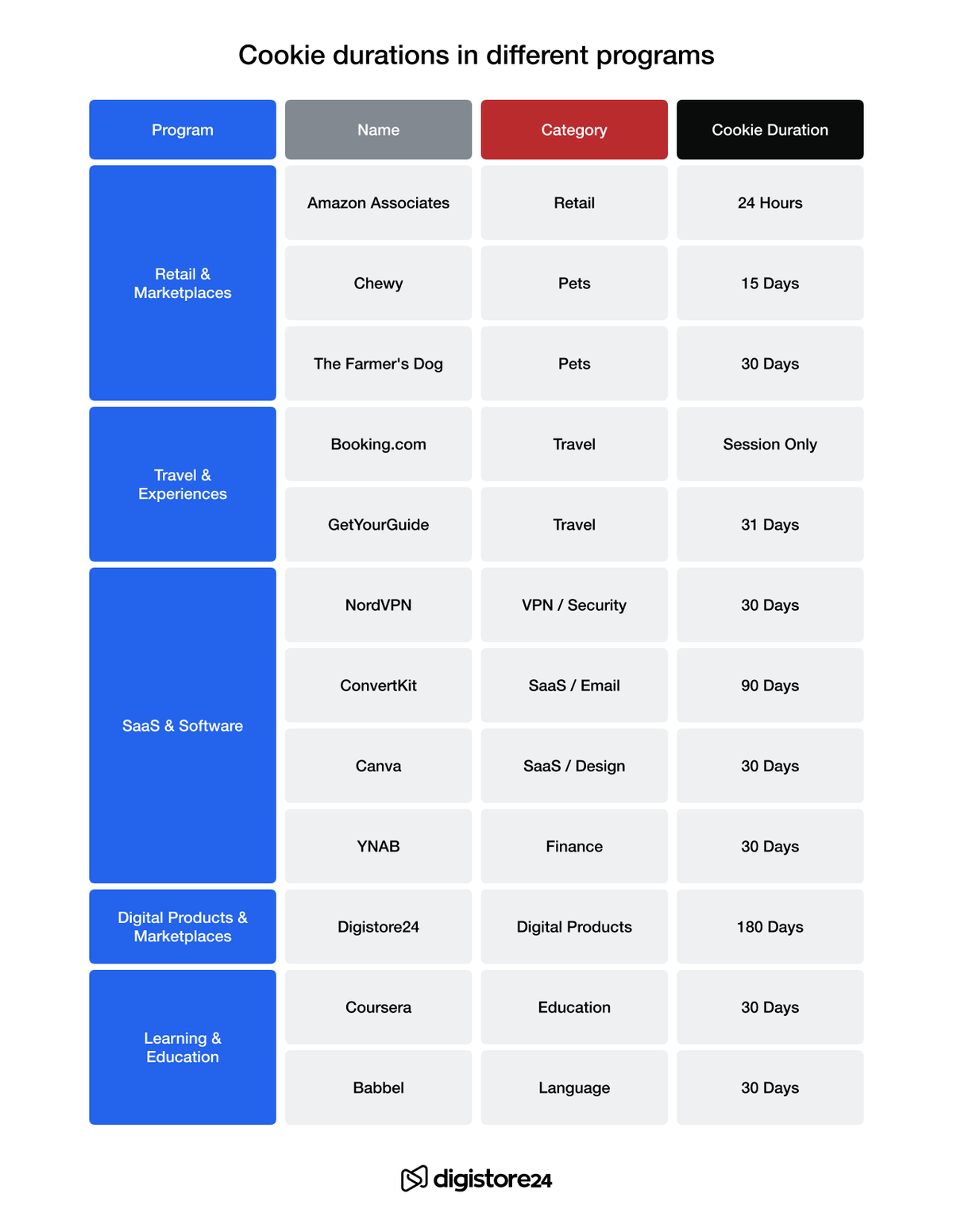
The Complete Niche Comparison Table
The 12 Best Niches for Affiliate Marketing Beginners

1. Digital Products & Online Courses
Beginner Rating: 5/5 — Excellent for beginners
Digital products — online courses, ebooks, membership programs, software templates — have no inventory, no fulfillment complexity, and commission rates of 30–70%. Some platforms offer up to 100% on entry-level products as a customer acquisition strategy. Competition is lower than in physical-product niches because products are often creator-specific rather than brand-name goods: a review of a specific copywriting course has almost no competing reviews.
Commission ranges & named programs
- Online courses (general): 30–50% per sale or more; Digistore24 offers many among its 8,500+ offers
- Membership programs: 20–40% recurring monthly
- High-ticket digital products: up to 100% on first sale via dedicated marketplaces
Real-world benchmark
Smart Passive Income, founded by Pat Flynn, built to drive towards six-figure monthly revenues — largely from digital product affiliate commissions and SaaS referrals — through honest product reviews and consistent audience-building. His publicly shared income reports from 2012–2020 remain one of the most documented records of the model's compounding potential.
First 90 Days
- Days 1–30: Sign up for Digistore24 as a free affiliate. Browse by niche category; identify 3–5 products with strong conversion rates and refund rates under 10%.
- Days 31–90: Publish 8–10 review posts targeting "[product name] review" keywords. Build one comparison post. Expect first commissions around day 45–75.
2. SaaS & AI Tools
Beginner Rating: 4/5 — Very good for beginners
SaaS products pay recurring commissions — the single most powerful income structure in affiliate marketing. Refer a customer to a $99/month tool at 30% commission and you earn $29.70 every month they stay subscribed. Ten such customers is $300/month in passive income from one campaign. Most SaaS reviews require only that you use the tool, not that you are a developer.
Commission ranges & named programs
- Email marketing tools: 20–30% recurring — ConvertKit
- VPN and cybersecurity tools: 30–50% recurring — NordVPN affiliate program
- Project management and productivity software: 20–40% recurring — Monday.com
- AI writing assistants: 20–40% per sale or recurring
Real-world benchmark
Adam Enfroy's blog scaled to reported revenues of over $80,000/month primarily from SaaS affiliate commissions, by publishing systematic software comparison content targeting "best [category] software" keywords and using transparent income reports to build authority. The model — focused niche, repeatable content format, recurring commissions — is directly replicable by beginners at a smaller scale.
First 90 Days
- Days 1–30: Sign up for 5–8 free trials of tools in your chosen sub-niche (AI writing, social scheduling, project management). Apply for their affiliate programs — most approve instantly via PartnerStack or Impact.
- Days 31–90: Publish detailed reviews targeting "[tool name] review 2026," then one comparison post for the two most popular tools in your sub-niche. Comparison content captures buyers at the final decision stage.
3. Personal Finance & Investing Basics
Beginner Rating: 3/5 — Good — micro-niche selection is essential
Personal finance pays some of the highest per-conversion commissions available: credit card referrals pay $100–$250 per approval; broker sign-ups pay $50–$200 per funded account. The audience is enormous and motivated. The caveat: finance is a YMYL (Your Money, Your Life) niche.
Google applies heightened scrutiny and a brand-new site without demonstrable financial credentials will struggle to rank competitive terms quickly. The beginner path is through micro-niches — budgeting for university students, saving on a single income — not broad topics like "how to invest."
Commission ranges & named programs
- Credit cards: $100–$250 per approval (CPA)
- Budgeting apps: 20–40% recurring — e.g. YNAB affiliate program (25% recurring)
- Investing platforms: $50–$200 per funded account
Real-world benchmark
The College Investor — founded by Robert Farrington — grew from a personal blog into an estimated $1M+ annual revenue operation by going narrow and deep on a single audience: student loan borrowers. That focus, rather than covering all personal finance, is the beginner template for success in this niche.
First 90 Days
- Days 1–30: Select a micro-niche. Apply for app-based finance affiliate programs — more accessible to new sites than major bank card programs.
- Days 31–90: Every article needs a clear author bio, cited sources, and prominent FTC-compliant affiliate disclosure. Non-negotiable for YMYL content.
4. Health, Wellness & Fitness
Beginner Rating: 3/5 — Good — micro-niche focus essential
The global wellness market was valued at $6.3 trillion in 2024 (Bloomberg) and is projected to reach $9 trillion by 2028 (Refersion/GWI). Supplement purchases are recurring, fitness equipment has high average order values, and the audience actively searches for solutions to urgent problems.
Like finance, health content carries YMYL weight — avoid medical claims and focus on product reviews, lifestyle content, and gear. The path in is through micro-niches: home gym equipment, posture improvement for desk workers, cycling nutrition.
Commission ranges & named programs
- Supplement and nutrition products: 10–30% per sale — e.g. MyProtein affiliate program (8%)
- Online coaching programs: 30–50% per sale — e.g. Beachbody on Demand (25% recurring)
- Fitness equipment: 5–15% per sale (high AOV — strong absolute commissions)
Real-world benchmark
Garage Gym Reviews built a focused affiliate business on a single corner of the fitness market — home and garage gym equipment — publishing rigorous, photographed equipment reviews. The site reportedly earns $80,000–$150,000 monthly from affiliate commissions. It demonstrates what deep niche focus on one specific audience achieves, as opposed to broad fitness content.
First 90 Days
- Days 1–30: Choose a specific sub-niche. Purchase and test at least one product — first-hand experience is a genuine differentiator in health.
- Days 31–90: Publish 10 pieces: 6 product reviews (with original photos where possible), 2 comparisons, 2 educational credibility pieces.
5. Remote Work & Productivity Tools
Beginner Rating: 5/5 — Top beginner pick for 2026
An estimated 28% of employees worldwide now work remotely at least part of the time. The tools this requires — ergonomic equipment, VPN services, project management software, noise-cancelling headphones, time-tracking apps — represent a fast-growing affiliate ecosystem where competition in specific sub-categories remains remarkably low.
People searching "best standing desk for home office" are ready to buy. No specialist credentials are needed, and the products are ones you can use yourself.
Commission ranges & named programs
- VPN and cybersecurity tools: 30–50% recurring — NordVPN (40% recurring)
- Productivity software: 20–40% recurring — Toggl (30%), Monday.com
- Ergonomic office furniture: 5–10% per sale (high AOV = strong commissions) — Flexispot (8–10%)
Real-world benchmark
Safety Detectives operates in the cybersecurity and privacy review sub-niche — covering VPNs and digital privacy tools — and earns an estimated $200,000+ monthly from affiliate commissions. A focused beginner site in a narrower slice of the same space can realistically reach $5,000–$20,000 monthly within 18–24 months.
First 90 Days
- Days 1–30: Focus on one sub-category. Apply to 4–5 affiliate programs — VPN and software programs approve newcomers quickly.
- Days 31–90: Publish 8 reviews with genuine first-hand usage notes; add one "Best [category] for Remote Workers in 2026" roundup and one "home office setup guide" linking to multiple products.
6. Online Education & E-Learning
Beginner Rating: 4/5 — Very good for beginners
The global e-learning market is valued at approximately $400 billion and growing at 14% CAGR through 2028. Every skills gap and career transition is a potential affiliate customer. Course review content is deeply evergreen — a review of a data analytics course remains relevant for 2–3 years. Commission rates are among the highest in affiliate marketing, often 30–75%, and this niche requires no credentials of your own.
Commission ranges & named programs
- Course creators via Digistore24: 30–75% per sale
- Coursera affiliate program (via Impact): 20–45% per sale
- Babbel affiliate program: 25% per sale
- Skillshare affiliate program: $10 per referred trial, plus recurring
Real-world benchmark
Learnopoly operates as a dedicated course review site, publishing detailed structured reviews across dozens of subjects. Targeting "[course name] review" keywords — among the highest-converting formats in affiliate marketing because searchers are already in the evaluation phase — comparable niche review sites in education have reported $10,000–$50,000/month within 18–24 months.
First 90 Days
- Days 1–30: Pick an education sub-niche aligned with your existing knowledge. Enrol in and complete 3–4 courses in that sub-niche.
- Days 31–90: Publish detailed honest reviews; build one "Best [skill] Courses for Beginners in 2026" cornerstone post earning commissions from multiple programs simultaneously.
7. Pet Care
Beginner Rating: 4/5 — Very good for beginners
US pet owners spent $147 billion on their animals in 2023 (American Pet Products Association). The audience is emotionally committed and returns repeatedly across the pet's lifetime. Content formats — product reviews, breed guides, training tips, health advice — are beginner-accessible, and commission rates on premium pet products and insurance are strong.
Commission ranges & named programs
- Premium pet food subscriptions: 14–25% — The Farmer's Dog affiliate program
- Pet accessories: 4–12% — Chewy affiliate program (4%)
- Pet insurance: $20–$100 per policy (CPA) — PetPlan affiliate program
- Pet training courses: 20–40% per sale
Real-world benchmark
Canine Journal is a focused dog-care affiliate site covering health, training, food, and product reviews, with estimated monthly traffic in the hundreds of thousands — built entirely on species-specific, internally well-linked content targeting recurring-purchase products like food, supplements, and accessories.
First 90 Days
- Days 1–30: Choose a specific animal and sub-focus (e.g., senior dog health). Apply for The Farmer's Dog and Chewy programs — both are beginner-accessible.
- Days 31–90: Publish 8–10 reviews targeting narrow keywords; add a comprehensive pillar post ("complete guide to [pet type/life stage]") linking to all review content.
8. Home Improvement & DIY
Beginner Rating: 4/5 — Very good for beginners
Home improvement is a high-intent, high-ticket niche persistently underestimated by beginners. People searching "best cordless drill for beginners" are often ready to buy immediately. Average order values are strong — a single power tool recommendation can earn $15–$40 on Amazon alone — and project tutorials attract natural backlinks from renovation communities and Pinterest.
Commission ranges & named programs
- Power tools and materials: 4–8% via Amazon Associates, 10–12% direct from brands
- Home security: $100+ per installation — SimpliSafe affiliate program
- Home décor and furniture: 5–7% — Wayfair affiliate program
- The Home Depot affiliate program: 1–8%
First 90 Days
- Days 1–30: Select a project sub-niche (e.g., apartment-friendly DIY). Document a real project if possible — original photos are a strong ranking signal.
- Days 31–90: Publish 6–8 tool reviews and 3–4 project tutorials; build a "complete beginner's guide to [project type]" pillar post.
9. Gaming & Esports
Beginner Rating: 4/5 — Very good for beginners — sub-niche focus required
Gaming is a $200+ billion global industry with over 3 billion gamers worldwide (Backlinko). Monetisation is diverse: physical hardware (high-ticket commissions), subscription services (recurring), and streaming equipment. First-hand gaming experience is a genuine differentiator. The key for beginners: platform or genre specificity. "Gaming" broadly is saturated; "best budget streaming PC under £600" faces entirely different competition.
Commission ranges & named programs
- Gaming peripherals: 5–15% direct — Razer affiliate program (10%), Logitech G
- VPN for gaming: 30–50% recurring — NordVPN
- Game keys and software: 5–10% — Fanatical affiliate program
Real-world benchmark
PC Part Picker generates millions monthly in affiliate revenue through a utility-first model — helping users select compatible PC components, earning commissions on every part chosen. For content-site benchmarking, DualShockers illustrates how genre-specific gaming content earns sustainably from peripheral recommendations.
First 90 Days
- Days 1–30: Select a platform or genre sub-niche. Apply for Amazon Associates and 2–3 brand-specific peripheral programs.
- Days 31–90: Publish 6–8 product reviews; create a comprehensive buying guide for a specific setup type.
10. Travel
Beginner Rating: 3/5 — Good — original experience is your competitive moat
The global travel market has returned to and exceeded pre-2020 levels. The category spans booking platforms, travel insurance ($20–$100 per policy CPA), travel credit cards ($100–$300 per approval), gear and accessories. Content is naturally aspirational — audience building is more organic than in purely transactional niches. Specificity is the beginner's edge: a site on slow travel in Southeast Asia for retirees faces a fundamentally different competitive landscape than generic travel tips content.
Commission ranges & named programs
- Hotel and accommodation: 25–40% of commission earned — Booking.com affiliate program
- Tours and experiences: 8% — GetYourGuide affiliate program
- Travel insurance: 10% — World Nomads affiliate program
- TravelPayouts aggregator: flights, hotels, and car rental in one program
Real-world benchmark
Nomadic Matt — founded by Matt Kepnes — grew from a personal blog to an estimated $750,000+ annual revenue, primarily from travel booking affiliate commissions and travel insurance referrals. Kepnes has publicly documented his growth trajectory, making his site one of the most useful long-term benchmarks: consistent publishing in a well-chosen niche over 5–8 years.
First 90 Days
- Days 1–30: Select a specific travel sub-niche. Apply for TravelPayouts and GetYourGuide. Document a real trip — original experience is your moat.
- Days 31–90: Publish destination-specific guides alongside gear and insurance reviews; build a "complete packing list for [destination/style]" page earning across multiple categories.
11. Creator Economy & Content Tools
Beginner Rating: 5/5 — Excellent — the most underserved niche on this list
The creator economy is now a $250 billion industry, with an estimated 50 million people identifying as content creators globally. These creators are voracious tool buyers: editing software, thumbnail design, scheduling platforms, microphones, cameras, lighting. For an affiliate marketer who is themselves building content — which you are, by definition — this niche offers first-hand experience with the exact products your audience needs. No major affiliate site has yet built a comprehensive creator tool comparison resource.
Commission ranges & named programs
- Graphic design tools: up to $36/subscriber — Canva affiliate program
- Video editing and transcription: 30% recurring — Descript affiliate program
- Live streaming software: 30% recurring — StreamYard affiliate program
- Email and newsletter platforms: 30% recurring — ConvertKit affiliate program
First 90 Days
- Days 1–30: Start your content channel simultaneously with your affiliate site — your own creation process is the content. Sign up for 4–5 creator tool programs.
- Days 31–90: Review every tool you use authentically; build a "complete setup guide for [creator type] beginners" post earning from multiple programs at once.
12. Hobbies & Crafts
Beginner Rating: 5/5 — Excellent — especially if you already have a passion niche
Hobbyist niches — woodworking, embroidery, aquarium-keeping, amateur radio, bouldering, sourdough baking — are among the most underestimated affiliate opportunities. Passionate enthusiasts spend consistently over many years and actively seek product recommendations from fellow hobbyists they trust.
Search volume is lower than broad niches but competition is very low and conversion rates are extremely high: the audience is deeply qualified. If you have an existing hobby, you have an existing niche with a built-in competitive moat.
Commission ranges & named programs
- Specialty tools and equipment: 4–12% — Amazon Associates (baseline for most hobby categories)
- Craft and design assets: 40% per sale — Creative Fabrica affiliate program
- Skill-building courses: 20–30% — Skillshare affiliate program
- Craft materials and kits: 10–15% — LoveCrafts affiliate program
First 90 Days
- Days 1–30: List every product, tool, book, or course you have personally used in your hobby — these are your first affiliate content targets. Sign up for Amazon Associates and 2–3 niche-specific programs.
- Days 31–90: Publish "honest review from an actual [hobbyist]" pieces; create a "complete beginner's equipment guide for [hobby]" pillar post covering entry-level to advanced gear.
Niches Beginners Should Approach with Caution
Not every high-commission niche is beginner-accessible. Two categories have particularly wide gaps between apparent profitability and realistic beginner results:
Insurance and regulated financial advice. Life insurance and investment advice programs pay $200–$1,000 per policy. They also demand E-E-A-T signals that a new site cannot generate quickly. Google's search quality evaluator guidelines specifically flag insurance as YMYL requiring demonstrable expertise. Beginners without established credentials typically find their content buried well beyond the first few pages regardless of quality.
General weight loss and medical treatment niches. The weight loss niche is one of the most searched topics and one of the most algorithmically penalised spaces for thin or unqualified content. FTC disclosure requirements for supplement promotion add compliance complexity. The fitness sub-niches recommended above — equipment reviews, specific training categories, nutrition for specific diets — access the same commercial appeal without these constraints.
Broad "make money online" and general marketing niches. The irony of affiliate marketing is that "affiliate marketing" itself is one of the most competitive niches a beginner can enter. The space is dominated by well-funded operators with years of domain authority, and the audience is inherently sceptical of commission-motivated recommendations about commission-motivated businesses — a structural disadvantage that is very hard to overcome early on.

High-Ticket vs. Recurring Commissions: Which Model Suits Beginners?
High-ticket programs pay large one-time commissions per sale — $500 for referring a $2,000 course, or $200 for a funded investment account. The challenge: high-ticket products require more trust and more deliberation, meaning conversion rates are lower and audiences must be warmer.
Recurring commission programs pay smaller amounts monthly — but every month the customer stays subscribed. A SaaS tool paying $25/month per referral sounds modest. Refer ten customers who stay for twelve months and that is $3,000 from one campaign. For most beginners, recurring commissions are the better starting point for three reasons:
- They compound — income grows with your referral base without requiring proportional new content.
- Lower-priced subscriptions ($20–$100/month) have shorter deliberation cycles and higher conversion rates.
- Platforms like Digistore24 combine reasonable entry prices with high recurring commission rates, meaning one referred customer can generate meaningful income over their subscription lifetime.
High-ticket programs work well once you have an established, trusting audience. A sensible beginner strategy: build on recurring-commission products first, then layer in high-ticket recommendations as authority develops.
How to Choose the Best Affiliate Niche: A Step-by-Step Framework
Step 1: Start with what you know, then validate demand. List topics where you have genuine knowledge or experience. Then check each against Google Trends (free) and a keyword research tool (Ahrefs, Semrush, or free Ubersuggest) to verify active search demand. Knowledge without demand is a blog. Demand without connection is a grind. You want both.
Step 2: Confirm affiliate programs exist before committing. Search "[niche] affiliate program" on Google. If you find multiple programs with clear commission structures, the niche has commercial infrastructure. Digistore24's marketplace is a useful exploration tool — browsing by niche category quickly shows which areas have dense, high-converting offer ecosystems.
Step 3: Assess competition at keyword level, not niche level. "Health and wellness" is saturated. "Best foam rollers for desk workers with lower back pain" has real commercial intent and manageable competition. Use a keyword tool to find terms with 100–1,000 monthly searches and keyword difficulty below 20 — beginner-accessible targets exist within almost any niche at this specificity level.
Step 4: Map the recurring revenue architecture. Before committing to a niche, identify what subscription or membership products exist within it. If the niche is dominated by one-time purchases, income will be transactional rather than compounding. Niches with strong recurring architecture are structurally superior for long-term beginner income.
Step 5: Run the 6-month content test honestly. Can you produce one quality piece of content per week on this topic for six months without running dry? If the honest answer is no, the niche is wrong regardless of its commercial appeal. Consistency beats niche optimization every time.
What to Do After You Pick Your Niche: Your First 90 Days
Days 1–30: Foundation. Set up a self-hosted WordPress site — you own the platform and control the SEO. Register a brandable domain name, install WordPress on a reliable host, and choose a clean, fast theme. Apply for 5–8 affiliate programs (including Digistore24 for digital products). Install Google Search Console and Google Analytics 4 (both free). Write an honest, personal About page. Then publish your first three pieces of content before the site is perfect — do not wait.
Days 31–60: Content velocity. Your primary goal is 10–15 published pieces. Aim for 60% product reviews targeting "[product name] review 2026" keywords, 25% comparison content ("X vs Y for beginners"), and 15% educational credibility pieces ("how to choose a [product category]"). Every piece needs a prominent affiliate disclosure, your personal perspective where possible, internal links to other content, and a clear reader-serving CTA. Track impressions weekly in Google Search Console — your earliest signal of what Google thinks your site covers.
Days 61–90: Authority and first commission. Build one cornerstone piece — a long-form guide covering your niche exhaustively, becoming the internal hub all other content links back to. Start an email list with a simple free-resource opt-in. Realistic expectations: in a beginner-friendly niche with consistent publishing, most affiliates see first commissions within 45–75 days. The amount will be small. That is entirely normal — it is proof the model works. Everything after that is scaling what converts.
Conclusion: Pick One, Start Today
Every niche in this guide can produce meaningful affiliate income for a beginner who commits, publishes consistently, and builds genuine trust with their audience. The research phase ends when you pick a niche and publish your first piece of content — not when your site is perfect, not when you have explored every possible program.
The 12 niches above are a starting point, not a ceiling. Execution in a good niche will always outperform perfection in a theoretically optimal one.
→ Browse 8,500+ vetted offers across 44 niches — transparent conversion data, free to join, no fees for affiliates: Explore the Digistore24 Marketplace
→ List and sell your own digital products — Digistore24 handles payments, tax, and affiliate recruitment: Start a Free Digistore24 Vendor Account
FAQ
Which is the best niche for affiliate marketing beginners in 2026?
For absolute beginners, the most accessible niches are Digital Products & Online Courses, Remote Work & Productivity Tools, and Creator Economy Tools. All three have low sub-niche competition, require no specialist credentials, and have strong recurring commission infrastructure. The best niche for you is the intersection of these accessibility factors and your existing interests or experience.
What are the three main affiliate niches?
The traditional "big three" are Wealth (personal finance, investing, business), Health (fitness, nutrition, wellness), and Relationships (dating, parenting, lifestyle). All are evergreen with enormous audiences. All are also highly competitive — beginners should enter through narrow micro-niches rather than competing at the broad category level.
What is the highest-paying affiliate niche?
By absolute per-conversion value, Personal Finance and Insurance produces the highest payouts — credit card approvals ($100–$300), insurance policies ($50–$500). B2B SaaS is close behind due to high subscription values. However, the most profitable niche for a beginner is not always the highest-paying: high-ticket niches have lower conversion rates, and a well-executed recurring-commission SaaS operation often out-earns a thin finance affiliate site over 12–24 months.
How much do affiliate marketers earn as beginners?
Realistic expectations: $0–$500/month in months 1–6 while traffic builds, scaling to $500–$2,000/month in months 7–12 with consistent publishing. Beginner affiliates typically earn $0–$1,000/month DemandSage, with income compounding significantly with experience — affiliates with more than three years of experience earn 9.45x more than beginners Ahrefs, according to data cited by Ahrefs from Authority Hacker's research.
The compounding nature of content-driven affiliate income means patience in the early months pays increasingly large dividends from month 12 onward.
Do I need a website to start affiliate marketing?
No — social media platforms (Instagram, TikTok, YouTube, Pinterest) and email newsletters can host affiliate marketing without a website. However, a self-hosted site is strongly recommended for long-term success: you own the platform, the content, and the audience data. Social platforms change algorithms or remove accounts without warning. A website with an email list is the most resilient foundation for sustainable income.
What is one of the best affiliate marketing courses for beginners?
One of the best affiliate marketing courses for beginners is our very own Launch Pad — you can join this for regular live calls, previous recording library and expert guidance to walk you right every step of the way.
Can I start affiliate marketing with no money?
Yes, though it takes longer. Free entry points include a blog on WordPress.com, a YouTube channel, or social platforms as your content channel. The tradeoff is less control and slower growth. A realistic minimum investment for a properly set up self-hosted affiliate site is $50–$150 for domain and hosting in year one — a very low barrier relative to virtually any other business model.
How long does it take to earn a first commission?
In a beginner-friendly niche with consistent content production (minimum one post per week), most affiliates see their first commission within 45–90 days. SEO-dependent strategies require patience but pay out consistently once established. Affiliates using social or paid traffic can see commissions faster but face different challenges around audience building and advertising costs.