Small Business Payment Processing: How to Choose a Setup That Fits Your Online Brand

Learn how to choose the right small business payment processing setup by comparing gateways, processors, and Merchant of Record models, while ensuring smooth checkout, reliable customer support, clear refund workflows, and more with Digistore24.

A payment button can work perfectly while the rest of the sale is a mess.
The buyer pays. Then who sends the receipt? Who helps when access fails? Who handles a refund request? Where does the order show up when it is time to reconcile payouts?
I would map the whole sale before comparing one rate.
If you sell a product, service, event, or subscription from a website, map the online buyer path. A countertop terminal or restaurant POS adds hardware and staff-workflow decisions. The same ownership questions still matter, but they are not the whole decision.
Start with the sale you actually have
Your payment setup should match how you sell.
A digital course has a different path from a local shop taking tap-to-pay. A coaching business collecting deposits has different needs from a subscription business managing renewals. An event needs a clean confirmation and support path. A physical offer adds delivery and fulfillment work.
Before you open a provider page, write down:
- Where the buyer pays: online, in person, by invoice, or through a mix.
- Whether the offer is one-time, recurring, installment-based, or a deposit.
- What happens immediately after approval: a download, booking, account access, receipt, or shipment.
- Who answers a buyer who cannot complete checkout.
- Which markets you serve now and which are merely future plans.
That list is basic. It is also where the useful decisions begin.
Imagine selling a $48 live workshop from one page. The buyer needs a receipt, a calendar link, and clear support details after payment. If the payment succeeds but the calendar link never arrives, the setup handled the card step and missed the customer step.
The buyer path for that workshop is short: offer page → checkout → receipt and calendar link → support and records. Keep it short on purpose. Every handoff deserves a test before a real customer finds it first.
Know what each payment component actually does
Payment language gets messy fast. A gateway, processor, merchant account, and Merchant of Record (MoR) can have different jobs.
1. A payment gateway handles the online handoff
A gateway securely transmits payment information between the buyer, your business, and the processor. It is the connection that carries the payment data from checkout into the authorization flow.
A gateway is not automatically the company doing every other job around the sale.
2. A payment processor moves the transaction through the system
A processor facilitates authorization, processing, and settlement between the buyer’s financial institution and the business side of the transaction. Gateways and processors often work together. Some providers bundle them in one service, often called a payment service provider (PSP).
The bundle can simplify setup. It does not eliminate the need to identify the owner of support, refunds, disputes, records, and delivery.
3. A merchant account is part of the settlement path
A merchant account is a specialized account used to accept and process electronic payments. In a common arrangement, payment proceeds are held there before settlement to the business bank account. The exact timing, fees, requirements, and account structure come from the provider agreement, not a generic article. Stripe’s merchant-account overview explains the functional role.
4. A Merchant of Record is a seller-of-record model
A MoR is different from a checkout feature. Its seller-of-record role applies to the transactions covered by its agreement, policies, and applicable law.
A MoR arrangement can change how transaction-level taxes, invoicing, payment processing, refunds, and compliance are handled. You still need a clear offer, accurate customer communications, dependable delivery, business records, and a current understanding of the responsibilities that remain with you.
Treat these labels as job descriptions. Ask what each one owns after the buyer clicks pay.
Match the payment model to the work
Use this as a working comparison. It is a responsibility map, not a winner chart.
Work item | Gateway / processor arrangement | Bundled PSP arrangement | Merchant of Record / reseller arrangement |
|---|---|---|---|
Checkout and authorization | Confirm which checkout and integration pieces are supplied. | Confirm the bundled tools and account configuration. | Confirm the covered checkout and transaction scope. |
Tax, invoices, and transaction compliance | Confirm the work your agreement leaves with you. | Confirm the work your agreement leaves with you. | Confirm the contractual MoR or reseller scope for the transaction; document the responsibilities you retain. |
Refunds and disputes | Name the owner, evidence process, and buyer contact path. | Name the owner, evidence process, and buyer contact path. | Confirm return settings, Brand actions, support handoffs, and dispute workflow. |
Offer eligibility | Review provider rules and approval requirements. | Review provider rules and approval requirements. | Review platform rules, product approval, and permitted-product requirements. |
Records and reconciliation | Build a reporting and reconciliation process. | Build a reporting and reconciliation process. | Reconcile your own business records, orders, refunds, and payouts. |
The right model makes the work manageable for your offer, team, customers, and current markets.
Confirm the payment methods that qualified buyers can actually use
A payment method matters only when an eligible buyer can see and use it.
For Digistore24, the current payment-method setup guidance says a vendor can activate or deactivate listed options. It also says the options customers can use depend on factors including the reseller, payment plan, customer type, customer country, and order-form type. The help article documents methods including cards, SEPA direct debit, bank transfer/prepayment, PayPal Wallet, Instant Bank Payments, Sezzle, Klarna, Apple Pay and Google Pay, and Wero.
Test the actual offer. The payment logo row is not proof that every method appears for every buyer.
Test the after-sale path before launch
I like a small, boring test before a big traffic push.
- Open checkout on a phone. Read the price, offer description, and support path as a buyer would.
- Confirm the payment options qualified buyers can actually use for this offer and checkout.
- Place a permitted test order where your account and platform allow it. Verify the confirmation, receipt, and delivery or access signal.
- Check the cancellation and refund setup. Make the buyer-facing promise match the configured workflow.
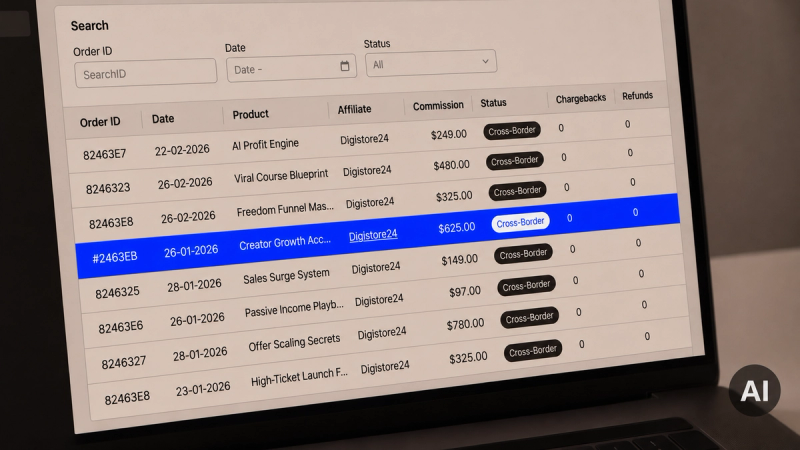
- Find the reporting trail. Connect an order to the information your bookkeeping process needs.
- Name the buyer-support owner. A customer with a payment or access question should know where to go.
- Write down the dispute path. Keep delivery evidence, offer terms, and customer-contact records organized.
The payment part of your business should be boring in the best way.
For the $48 workshop, the test ends when the calendar link arrives, the buyer knows where to ask for help, and the order appears in the records you will reconcile. One handoff at a time. That is how you find the real weak spot without rebuilding everything.
Where Digistore24 can fit for eligible online offers
Digistore24 is worth evaluating when you sell an eligible online offer and want to assess a reseller-based sales platform instead of assembling every part of the flow yourself.
Its help-center overview describes Digistore24 as a reseller-based online sales platform for vendors and affiliates. It says vendors can sell digital products, selected physical products, services, events, and seminars; create an order form for a website; and use the platform’s post-payment tax-accounting, bookkeeping, and invoicing workflow.
Digistore24’s public Merchant-of-Record and international-compliance page describes its MoR positioning. Read it with the applicable reseller agreement. The current agreement, entity, product setup, buyer market, and policies determine the transaction-level scope and the Vendor work that remains.
Refunds are another operating workflow, not a set-it-and-forget-it detail. The current refunds and returns guidance says return periods are selected in product setup and describes vendor-initiated refunds and platform processing steps. Your offer, support path, settings, and records still need to agree with one another.
Availability, product approval, payment methods, return choices, and responsibility allocation can vary by offer, buyer, country, payment plan, reseller or entity, order-form type, current terms, and applicable law. Confirm the setup for your business and get qualified advice where needed.
Keep gross customer payments, settlement, and profit separate
Let’s keep the math clean.
Imagine 250 buyer payments at $48 each.
250 × $48 = $12,000 in hypothetical gross customer payments.
That is not profit. It may not be the settlement amount either.
Taxes collected or withheld, refunds, disputed payments, provider or platform deductions, delivery costs, advertising, payroll, and other operating expenses can change what remains. The point is not to guess a fee. Keep gross customer payments, settlement, and profit in separate boxes.
I would build that habit early. It saves a lot of confused conversations later.
Make a one-page payment map
Before you compare proposals or turn on ads, put these fields on one page.
Field | Your answer |
|---|---|
Offer | What exactly is sold, and how is it delivered? |
Channel | Where does the buyer pay? |
Payment plan | One-time, recurring, installment, deposit, or another structure? |
Buyer locations | Current locations and the next market only. |
Seller-of-record model | Who is the seller for the covered transaction? |
Support owner | Who answers payment and access questions? |
Refund path | What does the buyer see, and who acts? |
Delivery handoff | What signal triggers access, booking, or fulfillment? |
Records owner | Who reconciles orders, refunds, and payouts? |
Open questions | What needs a current answer before launch? |
Complete this page before you call a sales rep, compare provider prices, or install another plugin.
It turns a vague request for “payment processing” into an operating requirement.
Frequently Asked Questions
A gateway securely transmits payment information from checkout into the authorization flow. A processor facilitates authorization, processing, and settlement through the payment system. They can be separate services or part of one bundled setup.
Every card-payment arrangement needs merchant-account functionality. Some PSPs bundle or aggregate it; other arrangements use a dedicated merchant account. Ask how your setup handles authorization, settlement, reporting, and support.
Compare the full operating cost: checkout channel, payment methods, offer eligibility, refund workflow, buyer support, records, and the work your team still owns. A rate alone cannot show you that.
An MoR’s role is defined by its current terms and the covered transaction. Keep ownership clear for your offer, customer communications, delivery, records, and every responsibility that remains with your business.
Make the one-page payment map before you select a platform. Then choose based on the work your business actually needs done.