

Affiliate marketing is now a $20+ billion global industry, with North America and Europe accounting for roughly 70% of the spend and Asia-Pacific posting the fastest growth. It accounts for around 16% of all online orders in the US. None of this is fringe income any more — it's a recognised channel that brands rely on, and that thousands of independent operators earn full-time livings from.
But the shape of "success" has changed. The era of dropping links into thin posts and waiting for cheques is gone. Search engines have spent two algorithm cycles rewarding genuine expertise. Privacy changes have reshaped how attribution works.
AI has flooded the SERPs with low-effort content and forced quality to matter more, not less. The affiliates earning real money in 2026 treat the work as a business — niche-led, properly measured, ethically run, and built to survive the next algorithm update.
This is the complete pillar guide to getting there. It covers the foundations (niche, audience, content, products), the technical layer (tracking, analytics, attribution), the growth strategies (lifetime commissions, upsells, scaling, diversification), the platforms that power all of it — including a comparison featuring Digistore24 — and the ethical and legal practices that separate businesses from short-lived hustles. It's long, but it's the picture in full.
The Foundation: Niche and Audience
Most affiliate businesses that fail never really decided who they were for.
Niche depth matters more in 2026 than at any earlier point. Search engines now reward sites that demonstrate deep, demonstrable expertise in a defined area and quietly demote the generalists. A site on "personal finance" competes with the entire internet; a site on debt-payoff strategies for self-employed parents in their forties competes with almost nobody — and converts at a multiple of the broader site, because the reader feels recognised.
A good niche sits at the intersection of three things: a subject you can credibly speak on, an audience with a real problem they spend money trying to solve, and products that genuinely solve it. Strip any one of those and the model breaks. A passion niche without buyer intent stays a hobby. A profitable niche you have nothing to say about reads like marketing in the worst sense.
Audience research is where most of the real work happens, and most of it is unglamorous: read the forums and subreddits where your prospective audience already talks; scan the one-star reviews of the products in your category for the language of unmet need; pay attention to the questions in YouTube comments. The phrases your audience actually uses are the phrases that turn into content that converts. Generic personas built from demographic data tell you almost nothing useful.
The Strategy: Content, Traffic, and Conversion
A complete affiliate strategy has three working parts: content that earns trust, traffic that finds the content, and a conversion path that turns the reader into a buyer. Each on its own does nothing.
Content is where the work compounds. The formats that move affiliate revenue in 2026 are honest, useful, and specific: deep product reviews that actually evaluate weaknesses, head-to-head comparisons, tutorials that use a product as part of a real workflow, problem-led resource pages, and the occasional case study. Reviews that read like an honest friend almost always outperform reviews that read like marketing. Readers reward visible flaws with clicks; flawless writeups read as paid.
Traffic in 2026 is best treated as a portfolio. SEO remains the highest-leverage channel for content sites, but Google's AI Overviews have absorbed a slice of the informational queries that used to send traffic onward — making transactional and review intent more valuable per visit, not less. Add a second engine: a YouTube channel, a presence on whichever short-form platform fits your audience, or an email list. A blog that earns from organic search alone is one update away from a hard quarter.
Paid traffic is part of many serious affiliates' strategy, but expectations need calibrating. Joe Addona, who runs Outbrain's affiliate and direct-response team, is direct about what realistic returns look like on native ads:
"If you're a successful native media buyer, if you're anywhere from 10% to 50% on your return on ad spend, I would be ecstatic. People expecting two to three times their ad spend will be disappointed — that's not going to happen on native."
The same principle applies across paid channels: anyone running ads against affiliate offers is buying inventory at scale, not running a guaranteed-margin business.
Conversion is the part most affiliates underwork. Call-to-action wording matters less than placement: links land best after the verdict, inside the comparison table, or at the step in a tutorial where the reader would need the tool. Mid-paragraph "by the way" links convert worse than most people think. Comparison tables outperform free-form prose for product roundups. And the post above the link does more conversion work than the link itself — a clear recommendation always outperforms a hedge.
Choosing the Right Products and Programs
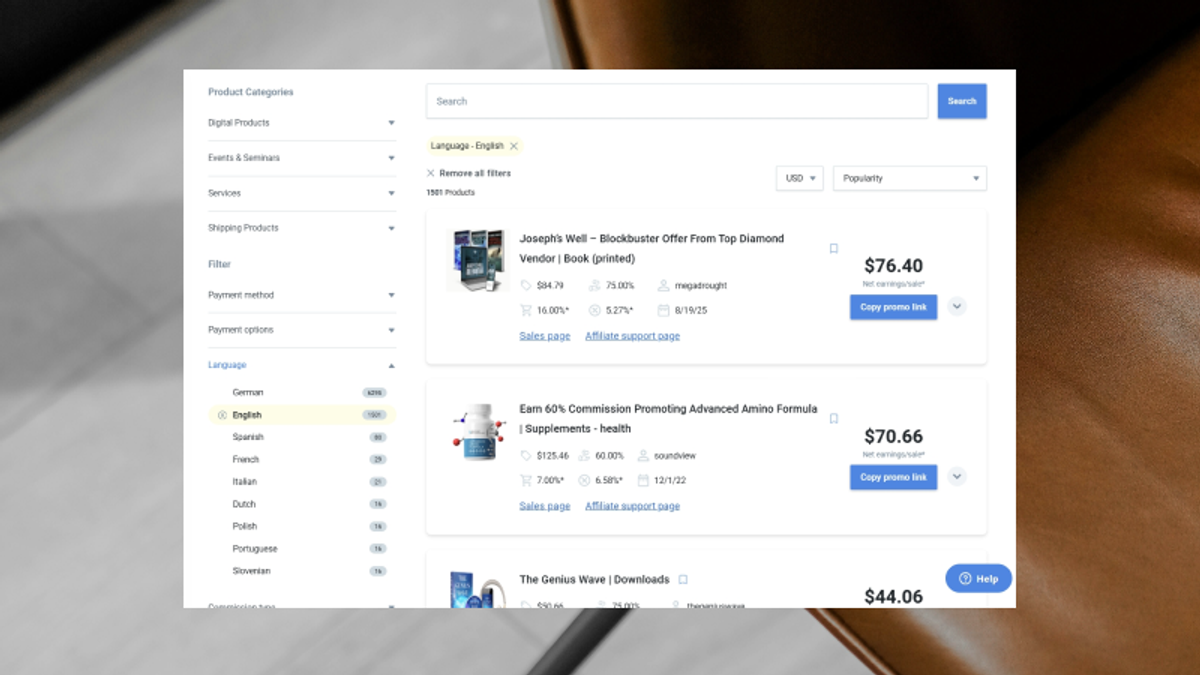
Once the strategy is in place, the question becomes what to promote — and this is where most affiliates leave the most money on the table.
The instinct is to chase commission rates. A 60% commission on a $30 product pays $18. A 15% commission on a $500 product pays $75. The headline rate is almost always less important than the price point, the conversion rate, the average order value, and whether the product genuinely solves the problem. A great product converting at 4% will out-earn a mediocre one at 60% commission every time. Refund rates matter too — high refunds wipe out commissions and burn audience trust.
When vetting an offer, look at six things: product quality (buy and use it if you can), vendor reputation and refund behaviour, the cookie or attribution window, whether commissions are one-off or recurring, the reported conversion rate, and whether lifetime commissions are available on future purchases from the same customer.
There's also a structural choice: individual programs versus an affiliate marketplace or network. Each individual program means another login, another payout threshold, another tax form, and a separate dashboard. Networks and marketplaces consolidate that — one account, one set of analytics, one payout, and a much wider pool of products to test.
How the Major Affiliate Platforms Compare in 2026
Where you operate shapes what you can do. The major networks each occupy a distinct position in 2026, and choosing among them is a serious decision rather than a default.
A few details worth pulling out, because they shape earnings more than the table can.
Digistore24
Digistore24 runs an international marketplace of around 8,500 vetted offers across 44+ niches, with a heavy strength in digital products, education, health, and finance. Vendors are reviewed before listing and refund rates are published on each product's marketplace page — both of which materially reduce the time affiliates spend filtering low-quality offers.
The platform's two most distinctive levers for affiliates are lifetime commissions (where you continue to earn from every subsequent purchase the referred customer makes using the same email address) and multi-device attribution (so a mobile click that converts on desktop still credits you).
Payouts run up to three times per week, which matters more than it sounds — faster cash flow lets affiliates running paid campaigns reinvest sooner, and predictability removes a planning headache. Tracking is built around S2S postback as standard, with multiple attribution options (last-cookie-wins, discount codes, promo tracking pixels) selectable per campaign.
As Merchant of Record, the platform also handles VAT and tax compliance on the vendor side, which indirectly benefits affiliates by keeping the offers they promote legally clean.
ClickBank
ClickBank is a giant of the US info-product space and is often the starting point for affiliates focused entirely on the North American market and willing to do their own vetting; quality is more variable than on more strictly curated platforms.
Awin and ShareASale
Awin and ShareASale (now a single network after the merger) is the home of consumer-brand affiliate marketing, with 25,000+ merchants spanning physical and digital goods. Commission rates run lower than on digital-product marketplaces, but volume and brand recognition can compensate.
CJ Affiliate
CJ Affiliate serves the enterprise tier, with deeper integrations for large brands but a smaller pool of niche digital products.
Advanced Tracking and Analytics
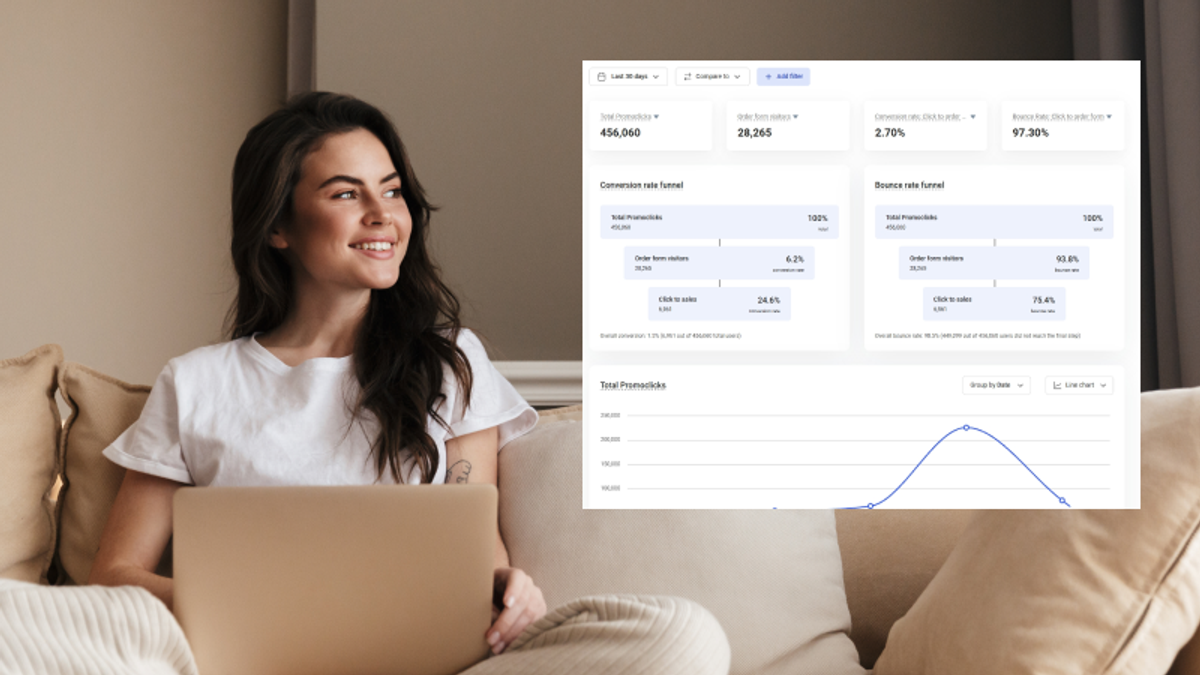
This is the section that separates affiliates who plateau from those who quietly build real income.
Clicks are the noisiest metric in affiliate marketing. The numbers that matter are EPC (earnings per click), conversion rate, refund and cancellation rate, and average order value. EPC is the most useful single figure most affiliates ignore — it tells you, in one number, which links and which traffic sources actually pay.
Then there's the attribution problem, which is no longer optional in 2026. Third-party cookies are effectively gone. Safari's Intelligent Tracking Prevention caps client-side cookies at seven days. iOS App Tracking Transparency strips a meaningful chunk of mobile attribution. Ad blockers suppress pixel tracking on 30–40% of desktop sessions.
Server-to-server (S2S) postback tracking has become the gold standard for a reason: conversion data fires directly from the vendor's server to the network's server, with no browser involvement, no cookies, and no dependence on a thank-you page loading. For any affiliate running paid traffic — and increasingly for organic ones — S2S is the difference between knowing what works and guessing.
Campaign and tracking keys layer on top of this. Append a unique identifier to each link by traffic source, post, or placement, and after a few weeks you stop wondering which content earns and start knowing. Cross-device attribution — where a mobile click that converts on desktop still credits you — quietly adds a meaningful percentage to the same effort.
A/B test what moves the needle: headlines, the structure of comparison tables, where the first link appears, the wording of the call to action. Change one thing at a time, give it enough data to mean something, keep what wins.
Maximising Earnings: Upsells, Order Bumps, Lifetime Commissions
Two affiliates promoting the same product can earn dramatically different amounts from the same traffic. The difference is rarely effort — it's the structure of the offer they're promoting.
- Order bumps and upsells. Products with a well-designed upsell sequence routinely raise average order value by 20–40%. As an affiliate, you don't build these — the vendor does — but you earn commission on the higher total. Choosing products that include them is a free lift on the same traffic.
- Recurring and lifetime commissions. A one-off commission pays once. A recurring commission on a subscription product pays every month the customer stays. A lifetime commission — where you continue to earn from a referred customer's future purchases from the same vendor — compounds quietly into the most durable form of affiliate income there is. A few well-chosen lifetime-commission products in the right niche can outperform dozens of one-off offers.
- Price ladder. A single $497 product is one decision. The same product offered with a $97 bump and a $997 upgrade lets the same buyer self-select up the ladder. As an affiliate, you earn on the full path — not just the front-end purchase. When evaluating an offer, look at the full price ladder, not just the headline.
The combination of these three — recurring or lifetime commissions, well-designed upsells, and a price ladder — quietly separates affiliates earning a few hundred a month from those earning a real income on the same traffic.
Scaling: Automation, Teams, and Diversification

A new affiliate business is built one piece of content at a time. A scaling one is built on systems.
Automate the repeatable: scheduled publishing, email sequences that fire when subscribers join or take an action, social posting from a single content calendar. None of this writes the content for you, but it stops you spending time on the parts that don't compound.
Bring in help before you're drowning, not after. A virtual assistant handling formatting, image sourcing, and link checks; a research assistant for product comparisons; an editor for the highest-traffic posts — each is a force multiplier on what's already working. Hire to what already earns; don't hire to fix what doesn't.
Diversify deliberately. On the traffic side, that means a second or third channel: email, video, short-form. Email is the single highest-leverage thing most affiliates underuse — it's the only audience channel you actually own, and routinely outperforms search and social on conversion rate per visitor.
On the offer side, three or four genuinely tested products almost always outperform a long, padded list. Diversification isn't spreading thin; it's making sure no single update or platform change can wipe out the business.
Ethics and Compliance: The Long-Term Foundation
Trust is the asset affiliate marketing runs on, and 2026 is a year regulators have made it clear they're paying attention.
In the US, the FTC's 2024 Consumer Reviews and Testimonials Rule introduced civil penalties for fake or manipulated reviews, and the broader endorsement guides require any material connection — affiliate links, free products, paid placements — to be disclosed clearly, conspicuously, and close to the endorsement itself.
A disclosure buried in a footer is no longer good enough; the FTC has said explicitly that disclosures should ideally be visible alongside the recommendation. The same rules now apply to AI-generated content and personas — "AI wrote it" is not a get-out clause.
In the EU and UK, GDPR-aligned consent rules govern how tracking is implemented, and the broader direction of travel is toward more transparency, not less.
The practical version of all this is straightforward. Disclose affiliate relationships near the top of the post and near each recommendation. Don't fabricate reviews. Don't promote products you haven't tested or wouldn't be comfortable recommending to a friend.
Common Pitfalls and How to Avoid Them
Most affiliate failures look the same up close.
Building on a foundation of thin content. This is the most consequential pitfall of the last two years, and it earned its own data set. A study of 7,105 niche and affiliate sites by SEO researchers tracking Google's Helpful Content Update found that nearly 50% lost more than 90% of their organic traffic between late 2023 and mid-2024, and 22% lost it entirely.
Lily Ray, VP of SEO Strategy at Amsive, has described the common profile of the sites hit hardest: hundreds or thousands of templated review pages with no evidence the author used the products, no named experts, and excessive affiliate links. Google now applies a site-wide quality signal, which means the thin content doesn't just fail to rank — it actively suppresses the good pages around it. Recovery, Ray notes, can take a year or more. The lesson is simple: depth beats volume, and there is no shortcut around it.
Chasing commissions over fit. The highest-paying product in a niche is rarely the best one to promote. Audience trust converts; mismatch destroys it.
Skipping the measurement step. Affiliates who don't know their EPC by traffic source are guessing about which of their effort earns. After three months of tracking, the picture is usually obvious — and the corrective actions are too.
Treating one traffic source as the business. SEO-only sites and social-only sites are one update from a bad year. Diversify earlier than feels necessary.
Quitting at the trough. Affiliate income for content sites is non-linear. Most sites that fail are abandoned in months six to twelve, just before the first real compounding shows up. The affiliates who succeed are usually the ones who kept going through the dip.
Ignoring disclosures and compliance. It looks like a small thing until it becomes an enforcement letter or a deplatformed account. The bar is low — a clear disclosure near the top of the post — and there is no reason not to clear it.
The Short Version
Affiliate marketing in 2026 rewards two things consistently: genuine usefulness to a real audience, and serious attention to the numbers behind the work. Almost everything in this guide reduces to one of those two categories.
Pick a niche you can speak to with authority. Build trust before you build a funnel. Choose products that genuinely solve your audience's problem and that pay you fairly for sending the customer — preferably for longer than the first purchase. Track what actually matters. Test, refine, and let the data tell you where to lean in. Build the business so a bad quarter doesn't end it.
None of it is fast, and none of it is mysterious. The affiliates earning real incomes in 2026 aren't the ones with the secret tool stack — they're the ones who got the fundamentals right and stayed at them. The platforms exist to make the work easier; Digistore24 is one of the established options for affiliates working with digital products, particularly where lifetime commissions, vetted offers, and Merchant-of-Record simplicity matter. The choice of platform is real, but the work is yours.
FAQ
How long does it take to succeed in affiliate marketing?
For a content-led business starting from zero, six to twelve months is realistic for the first consistent commissions, and eighteen to twenty-four months before it feels like a real income. Paid-traffic affiliates can move faster but typically lose money in the testing phase first. Niche depth and consistency compress the timeline more than effort does.
How much can a beginner realistically earn?
The honest distribution is wide. Industry surveys put roughly 40–55% of affiliates under $1,000 per month, with a much smaller top tier (around 10%) earning the majority of total industry revenue. The earnings gap is rarely about effort — it's almost always about niche fit, product selection, and measurement discipline.
Is affiliate marketing still profitable in 2026?
Yes, and more demonstrably than at most earlier points. The global industry is on track to clear $20 billion, accounts for around 16% of US online orders, and continues to grow at 14–15% annually. The shape of the work has shifted toward quality and measurement, but the opportunity is larger than it has ever been.
Do I need a website to do affiliate marketing?
No, but it helps. Affiliates earn through email lists, YouTube channels, short-form video, podcasts, and paid traffic without a website. A content site is the most durable foundation because it compounds in search, but it is one option among several.
What's the difference between an affiliate network and a marketplace?
A network connects affiliates to many separate merchant programs, each with its own terms and approval. A marketplace consolidates offers into one ecosystem with shared tracking, payouts, and analytics. Networks tend to suit consumer-brand promotion; marketplaces tend to suit digital-product affiliates who want breadth, faster setup, and unified reporting.
How important is S2S tracking for organic affiliates?
More important than it used to be. Even without paid traffic, S2S postback ensures conversions aren't lost to cookie restrictions, ad blockers, or cross-device behaviour — so the data you optimise content against is accurate. For paid traffic it is essentially non-negotiable.