

You already have a funnel that works in the US, or a single EU market.
- Your ads convert.
- Your upsells perform.
- Your checkout flow is dialed in.
The current market is working for you, but with rising competition and falling conversions, the next step seems obvious:
Translate the funnel, then launch and scale across Europe or globally.
Simple, right?
Not exactly.
One of the biggest mistakes most brands make when expanding into Europe is assuming that direct translation equals localization.
It doesn’t.
And in many cases, it’s the fastest way to destroy your conversion rates.
Here's what you need to know about localizing a sales funnel the right way. We’ll use US funnel expanding sales in Europe as an example.
Why Most US Funnels Fail in Europe
A funnel that performs well in the US won’t automatically work in Germany, France, Spain, the Netherlands—or anywhere else for that matter.
Not because the offer is bad.
But because European buyers often think, evaluate, and purchase differently than American audiences.
Simply put, different audiences have different:
- Trust expectations
- Buying behaviors
- Payment preferences
- Reactions to marketing language
- Cultural expectations during checkout
And when those expectations aren’t met, buyers hesitate—or even abandon their cart entirely.
That’s where quality localization comes into play—and by localization, we do not mean translation.
Translation ≠ Localization
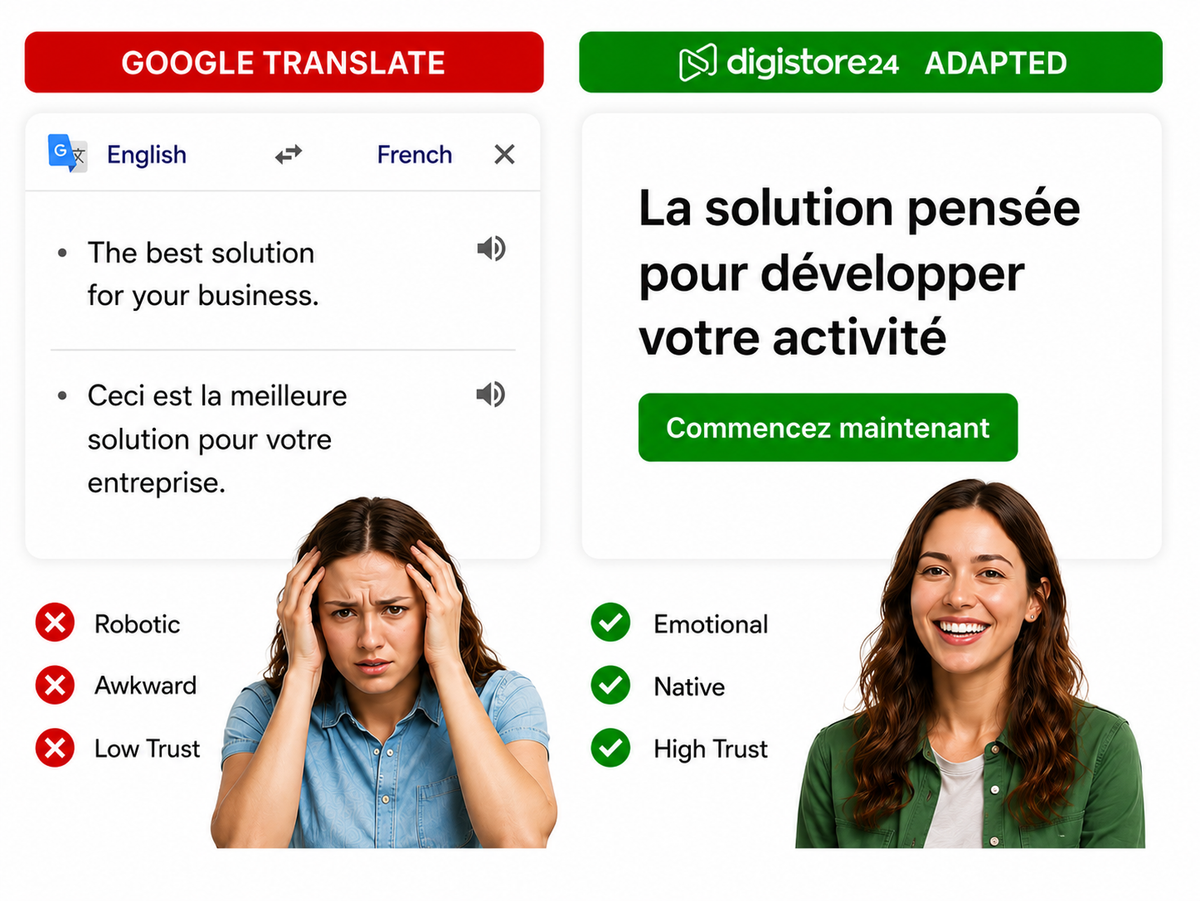
Running your funnel through Google Translate to simply translate ads for Europe is, alas, not a European marketing strategy.
A strong European marketing strategy goes much deeper than swapping English words for those in another language.
A properly localized funnel adapts so much more than language.
It focuses on:
- Messaging
- Tone
- Design elements
- Checkout experience
- Payment methods
- Trust signals
- Customer expectations
And the goal is simple—make the experience feel native to the buyer.
Because if your funnel still feels American, European audiences will notice immediately.
European Buyers Are More Cautious
Compared to American buyers, European consumers tend to be more skeptical of aggressive direct-response marketing.
To Europeans, language that works in the US often comes across as:
- Overhyped
- Pushy
- Unrealistic
- And too sales-heavy
That doesn’t mean European buyers don’t ever purchase.
They absolutely do. Just trust plays a much larger role in their buying process.
Especially in the DACH countries (Germany, Switzerland, Austria) and the Netherlands, where credibility and professionalism always tend to outperform aggressive sales tactics.
Localized Checkout Matters
One of the fastest ways to lose European buyers is at the checkout.
A lot of US businesses will just go ahead and launch in Europe with:
- English-only checkouts
- USD pricing only
- Limited payment options
- And generic credit card forms
These create immediate friction.
European buyers expect familiar language and currency, as well as local trusted payment options, like SEPA, Klarna and PayPal.
If buyers don’t see payment options they recognize and trust, many of them simply won’t complete the purchase.
That’s why localization isn’t just about copy—it’s also about infrastructure.
Trust Signals Are Different
Many of the trust elements US marketers rely on don’t always translate well overseas.
For example:
- Aggressive countdown timers can reduce trust
- Over-the-top claims can create skepticism
- Excessive urgency can hurt credibility
- And certain testimonial styles often feel inauthentic
In Europe, audiences tend to respond better to:
- Clear explanations
- Professional presentation
- Transparent pricing
- Credibility-focused messaging
- Localized user experiences
So even small adjustments can make a massive difference in conversion performance.
Why Localization Improves Conversion Rates
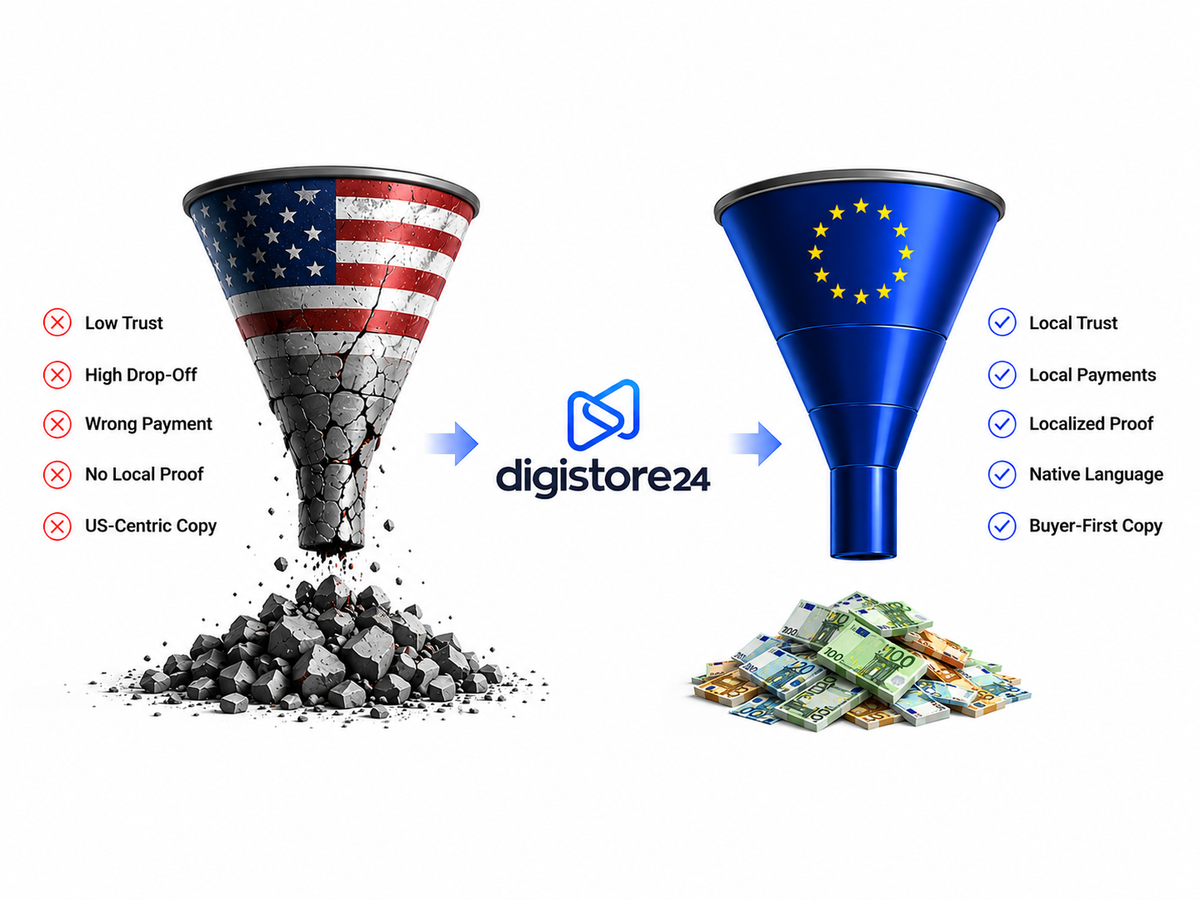
When a funnel feels local, buyers feel safer purchasing.
Which means:
- Higher checkout completion rates
- Lower bounce rates
- Better trust
- Improved customer experience
- And a higher long-term ROI
And the good news?
You don’t need to reinvent your funnel completely. In most cases, your core offer still works—it just needs quality adaptation.
How to Localize a Sales Funnel for Europe
Successful European funnel localization usually includes several layers.
1. Adapt the Messaging
Hooks, emotional drivers, and value propositions perform differently across cultures. Localization adjusts this messaging so that it resonates naturally with local buyers.
2. Localize Checkout and Pricing
Buyers should see:
- Local currencies and languages
- Familiar payment methods
- VAT-inclusive pricing
- Local trust badges
These details directly impact conversions.
3. Adjust the User Experience
Even subtle UX differences matter.
For example:
- Layout preferences
- Mobile behavior
- Formal vs casual language
- Expectations around privacy and transparency
Properly localized funnels account for all these differences.
4. Ensure Compliance With EU Standards
Europe has much stricter regulations around:
- VAT compliance
- Consumer rights
- Data privacy
- Refund policies
- Marketing disclosures
Not knowing how to navigate these regulations properly can lead to some serious headaches—and ignoring them is a serious legal and operational risk.
But thankfully, that’s where we come in…
How Digistore24 Supports Your European Expansion
Digistore24 makes it possible to expand internationally without building a whole new European infrastructure from scratch.
When you sell through Digistore24, you get built-in support for the key operational challenges of EU expansion:
- Localized checkout pages in multiple European languages
- Local payment methods (SEPA, Klarna, PayPal, and more)
- Automatic VAT handling so you stay compliant without extra effort
- Multi-currency support so buyers see prices in their local currency
- EU-compliant infrastructure covering consumer rights, refund policies, and data privacy
Beyond the platform, we've spent years studying what makes funnels convert across different European markets. We've seen firsthand how small cultural adjustments, like softening urgency language for German audiences or adding trust badges that resonate locally, can dramatically improve performance.
If you're thinking about expanding into Europe, the most important thing to understand is this: your offer probably works. It's the presentation that needs adapting.
Europe Is a Massive Opportunity Ready & Waiting
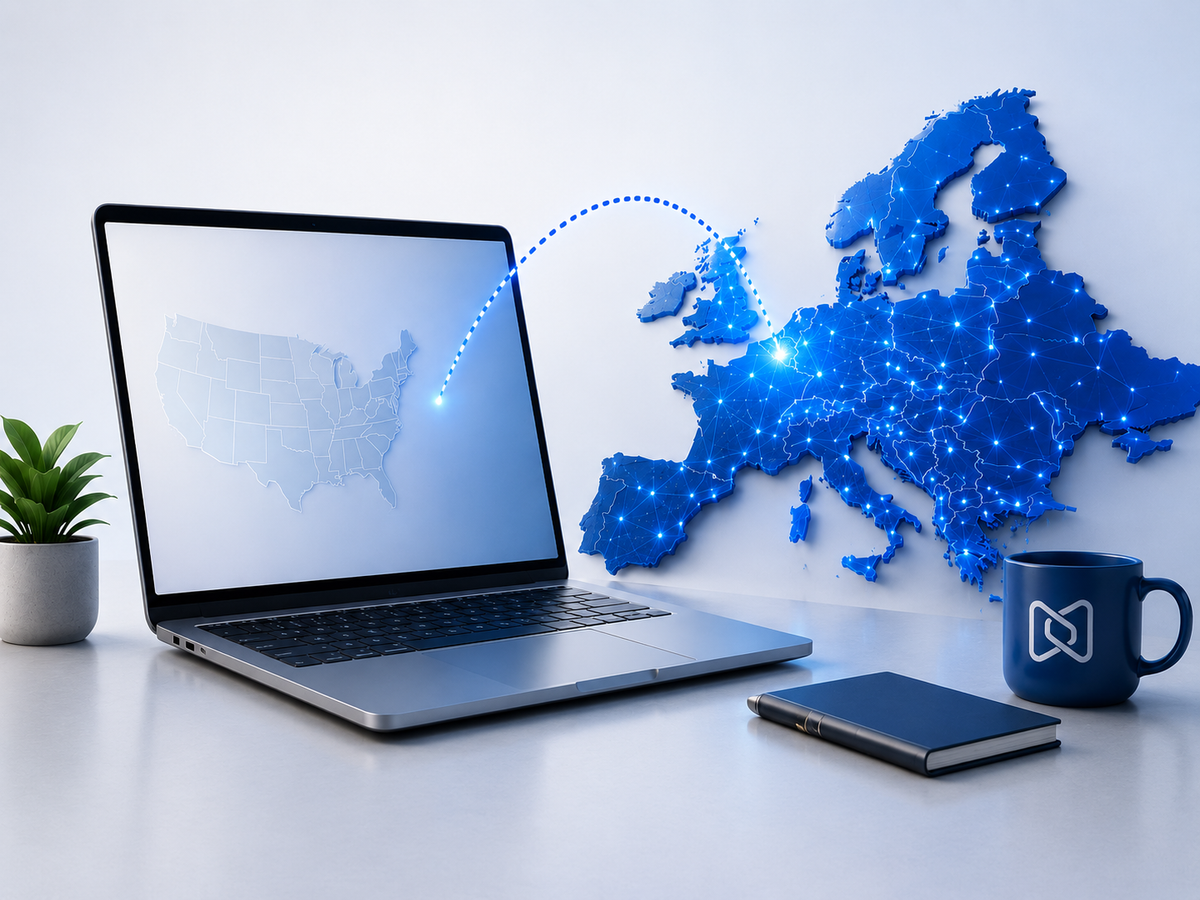
Many brands already have offers that could perform extremely well in Europe. But successful expansion means more than simply translating your existing funnel.
The brands that are winning in the international market right now are the ones adapting their customer experience through a strong European marketing strategy.
The European market is still far less saturated—and that’s a major opportunity for brands ready to expand—and willing to localize properly.
So…
Are You Ready to Start Your European Expansion?
If your offer already works, you may be closer to international scaling than you think.
Digistore24 gives you the infrastructure, compliance, and localized checkout experience you need to sell across Europe. And with the right approach to funnel adaptation, you can turn your existing offer into a scalable new revenue channel.