I grew up in Sydney, Australia as an immigrant. I spent years climbing the corporate ladder in IT, eventually making $130,000 to $150,000 a year. By most measures, that's a good life. By my measure, it was suffocating.
I left. And then I spent two years making almost every mistake you can make while trying to build a business.
Eventually, it worked. I built a seven-figure marketing agency, and I sold it. But the path from corporate escape to successful exit wasn't linear, and the most expensive part of it was a hiring decision I made at the exact wrong time — one that cost me roughly $500,000 before I understood what had gone wrong.
I'm sharing this because I see the same mistake being made constantly by operators who are scaling their digital product businesses, their affiliate programs, and their agencies. The timing and shape of the mistake look different, but the underlying error is always the same.
The General Manager Trap
When my agency started growing quickly, I did what most people do when they get busy: I hired to get myself out of the work. I brought in a general manager.
It seemed logical. I was wearing too many hats. Revenue was growing. I needed help at the top, so I hired at the top.
What I didn't understand then was that a general manager works when there's already a clear, documented machine running beneath them. Their job is to optimize and operate a system that exists. When there isn't a system yet — when the business is still relying on the founder's judgment, relationships, and on-the-fly decision-making — a general manager creates a layer without infrastructure.
In my case, that layer became a barrier between me and my clients, and between my team and the strategic thinking the work actually required. I had created management overhead on top of a business that still needed the founder in it.
That one hire cascaded into other problems: an account manager structure that added more layers, a remote copywriter arrangement that created quality issues I couldn't catch until it was too late. The compounding cost of those decisions over twelve to eighteen months is where that $500,000 number comes from.
The Hardest Thing to Admit

Here's what I said to myself when I finally understood what had happened:
"It was all my fault... their abilities were hampered by how I supported them."
That was an uncomfortable realization. The temptation, when things go wrong with hires, is to conclude that the people were wrong. That you hired badly. But the people I hired weren't the problem. The structure I put them in — without adequate systems, without clear processes, without the right stage of business to support their roles — was the problem.
They couldn't succeed because I hadn't built the infrastructure for them to succeed in. That's a founder failure, not a hiring failure.
For digital product sellers scaling their first team — or their first freelancer — this is the most important thing I can offer: before you hire, ask whether the role you're filling has a documented process, a clear success metric, and a support structure. If the answer to any of those is no, you're not ready to hire for that role. You're ready to document it.
What "Scaling" Actually Requires
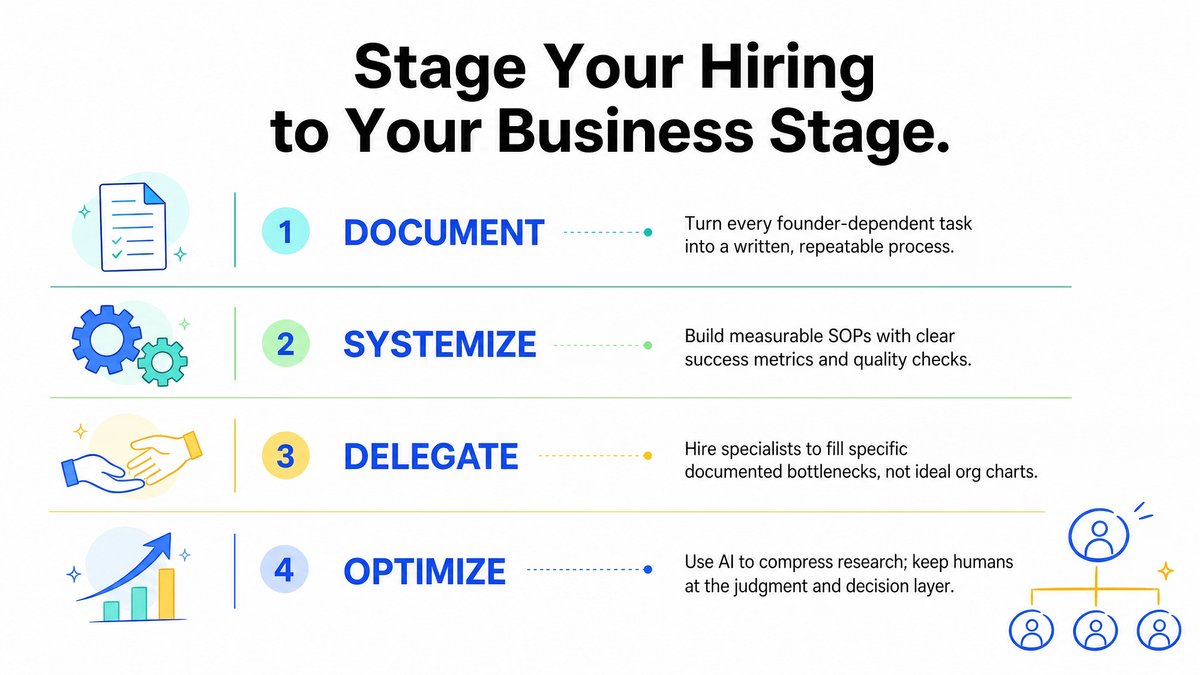
Scaling means your business grows without requiring a proportional increase in your personal time. That requires documented processes someone else can follow, that produce consistent output, and that can be measured and improved.
The transition from "founder doing everything" to "founder overseeing a team" required me to take every critical function I performed personally and turn it into a process outside my head: client onboarding, campaign setup, reporting, quality review. Each had to become documented, trainable, and delegatable.
If your course launch depends on you personally writing every email and managing every support ticket, you can't scale it. You can only work more hours.
The first scaling move isn't hiring. It's documentation. Build the SOP before you hand it to someone else.
AI as a Research Partner, Not a Replacement
I treat AI as a PhD-level research assistant — excellent at broad synthesis, pattern recognition, and first-draft frameworks. Not a strategist. Not a final-output generator.
AI tools now compress the research phase of any engagement dramatically. Market analysis, competitive positioning, audience insight synthesis — tasks that used to take days can be done in hours. That compression frees human time for what actually requires judgment: strategic recommendations, client communication, creative direction.
For digital product sellers, this means a solo operator can now run research operations that used to require a team. But the judgment layer — what to do with that research, what angle will resonate — still requires a human. Use AI to compress the front end. Keep humans at the decision point.
Platform Strategy: Where I'm Putting My Energy in 2025

I'm bullish on YouTube and Instagram.
- YouTube because it's the highest-retention long-form platform and the leads it generates are pre-sold in a way nothing else matches. If someone watches twelve minutes of your content before clicking your link, they arrive with fundamentally different trust than someone who saw a thirty-second ad.
- Instagram because short-form video plus direct messaging still creates conversion opportunities at a cost accessible for small operators.
I'm more cautious on LinkedIn. For most digital product sellers, the audience skews B2B — which can work for certain offers, but doesn't map as naturally to the affiliate and digital product space.
For affiliates and creators: YouTube content that answers specific buyer questions or walks through product comparisons creates evergreen assets that generate commissions long after the recording is done. That compounding quality is rare in social media.
The Lesson That Cost $500,000 and Was Worth Every Dollar
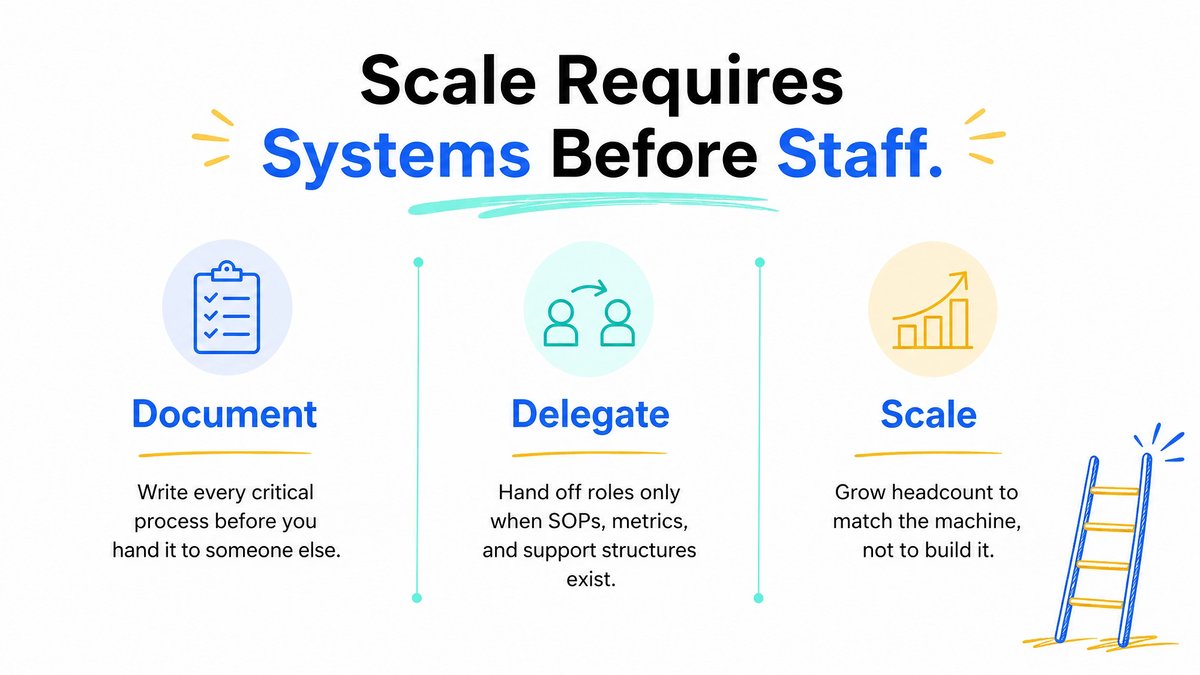
I don't actually regret the general manager hire. I regret the timing and the lack of preparation around it. But the lesson it taught me — that scale requires systems before staff, that process precedes delegation, that the founder's job is to build infrastructure rather than just to produce output — has informed everything I've built since.
The businesses I work with at Black Belt Consulting that scale quickly and sustainably share one trait: they document before they delegate. They understand what they're good at and what needs a system before it needs a person. They scale the machine, not just the headcount.
That's available to every digital product seller, affiliate operator, or creator who's willing to spend two weeks documenting before they spend two months hiring.
Practical Takeaways for Operators Scaling Their Digital Business
1. Don't hire before you document. If the role you're trying to fill relies on your personal judgment and can't be written down as a process, you're not ready to hire for it.
2. Ask what problem you're actually solving. The general manager hire solves a busyness problem. But busyness often means the system isn't right, not that you need more management. Fix the system first.
3. Proximity matters for creative roles. Remote freelancers for strategic or creative functions can work, but they need more structured feedback loops, clearer briefs, and more frequent review than in-person contributors.
4. Use AI to compress research, not to replace judgment. Let AI do the synthesis work. Keep humans in the loop for decisions, recommendations, and anything client-facing.
5. Stage your hiring to your business stage. A GM makes sense when you're running a machine. A specialist makes sense when you have a specific bottleneck. Match the hire to the actual constraint, not to your ideal org chart.
Build the Infrastructure Before You Need It
The founders who scale well tend to be the ones who do infrastructure work when things are going well — not when they're under pressure. They write the SOPs when the process is fresh, not when someone's already been onboarded into a gap. They document the funnel when it's converting well, not when they're scrambling to hand it off.
That kind of proactive infrastructure building is the difference between a business that scales when you want it to and one that breaks when you try.
Whatever stage you're at with your Digistore24 business — whether you're running your first offer solo or managing a team of affiliates and contractors — the next best investment you can make is probably documenting what's already working. That documentation is your next hire's onboarding. It's your quality standard. It's the floor from which you build.
Get the system right first. The scale follows.