After 20 years as an affiliate — promoting other people's products, earning commissions, and learning what makes a program worth my time — I finally set up an affiliate program of my own.
Rachel Miller and I launched Pagewheel, a SaaS page builder that uses AI to help creators build funnels and digital products. From day one, we grew our sales with an affiliate program. I set it up through First Promoter. We gave our affiliates 30% recurring commissions — meaning as long as the customer stays on the platform, the affiliate keeps getting paid. We wanted to build the kind of program we'd want to join.
Setting it up was surprisingly easy. It's basically a form. You fill out the details — commission rate, cookie duration, payout terms — and you're live. The platform gives you a manager dashboard and your affiliates get their own view where they can see their links, their clicks, and their earnings.
But then the surprises started.
What Actually Surprised Me
Tracking issues. We had affiliates telling us they'd made sales that weren't being credited. I could go in and look at sign-ups under each affiliate, but verifying disputed sales was harder than I expected. I spent a lot of time on live chat with the help center, trying to sort things out.
Manual payouts. This one genuinely caught me off guard. I assumed a full-service affiliate program would pay the affiliates automatically. The money is owed — why wouldn't it just go out? But no. You have to go in and manually process each payout. The system alerts you when payments are due, but if you're traveling or out of town for a week, those affiliates are waiting.
Confusing interface. Things are named in ways that don't always make sense. Setting up a new product or a new promotion requires testing and retesting to make sure you did it right. And because you're only doing this every few months — not daily — you forget the process each time. It never becomes second nature.
The monthly fee. First Promoter charges $49–$149+/month based on how much revenue your affiliates generate. The Starter plan caps at $5,000/month in affiliate-driven revenue and limits you to 1,000 affiliates. Here's the thing — you're paying that fee whether anyone is selling anything or not. When you're in the early stages of building a program, and sales are inconsistent, that's not an insignificant cost.
None of these were business-stopping problems. But they were friction. And friction adds up when you're trying to run a business, create content, and manage everything else.
Since partnering with Digistore24 in January 2026, we'll be moving Pagewheel's affiliate program over to Digistore this summer. The automated payouts, the reliable server-to-server tracking, and the fact that they handle the tax compliance — those are the things that solve the exact problems I ran into.
The 7 Steps (What I'd Tell You Based on What I've Learned)
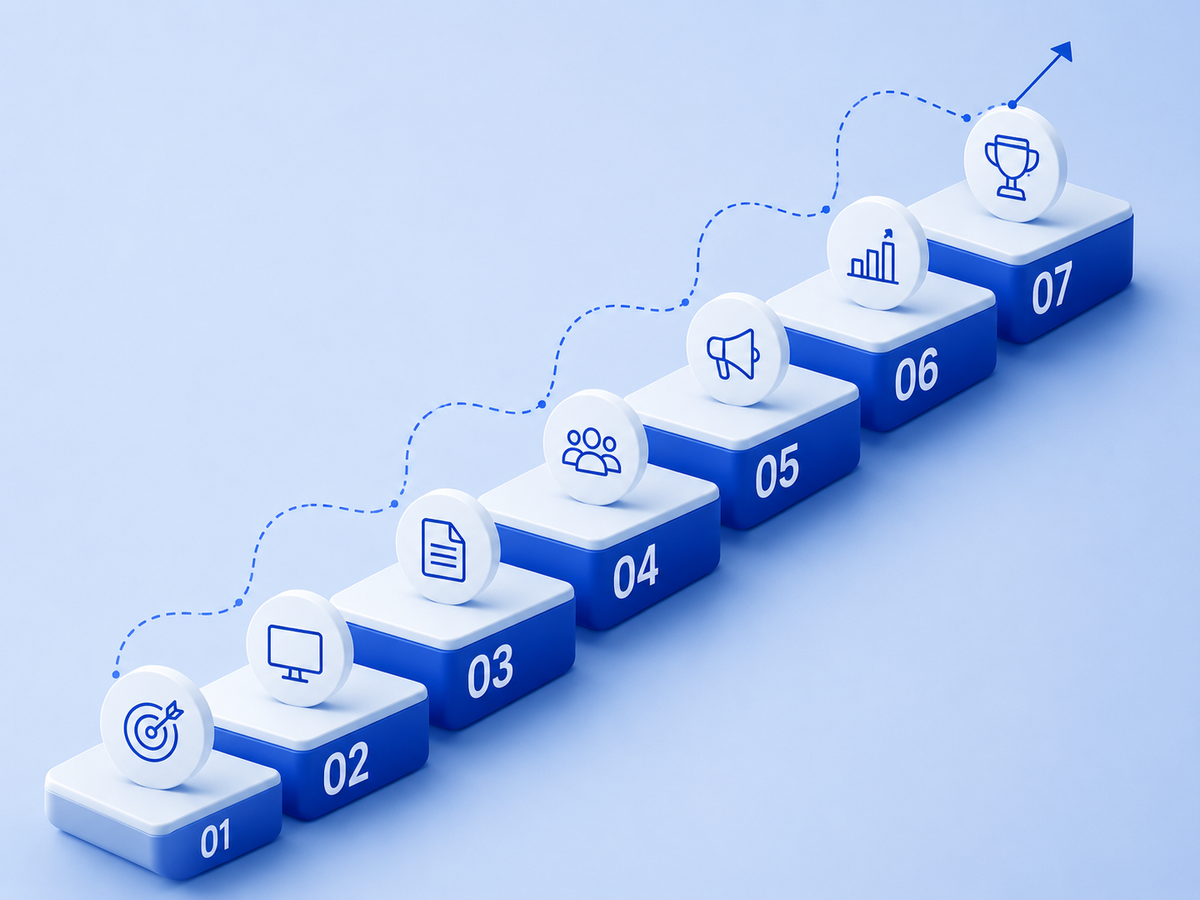
Step 1: Decide your commission structure before anything else
This is the first thing affiliates look at. If your commission isn't competitive, good affiliates won't promote you. Period.
Here's what I've learned from being on the affiliate side for two decades: the commission has to be worth the effort of creating content. If I'm going to write a blog post, send emails, or create a video about your product, the payout needs to justify that work.
For digital products and courses, 40–70% is standard. For SaaS, 20–40% recurring is attractive. For physical products, 10–20% is typical but the volume needs to be there.
We chose 30% recurring for Pagewheel because the lifetime value of a SaaS customer makes that sustainable for us and meaningful for affiliates. A $47/month product at 30% means $14/month per customer — and if that customer stays for two years, that's $336 from a single referral. That math is what gets good affiliates excited.
Step 2: Choose your platform carefully
This is where I learned the most. You have three options:
DIY with standalone software (like First Promoter, Rewardful, or PartnerStack). You get an affiliate dashboard bolted onto your existing payment system. Setup is easy. But you own all the operational work: payouts, tracking disputes, tax forms, and troubleshooting. These tools work well when you have a smaller program — I'd say under 100 affiliates. But as you scale, the complications multiply. More affiliates means more payout processing, more tracking disputes, more support questions. And you're paying that monthly fee ($49–$149+) regardless of whether anyone is generating sales. The costs and the management burden grow together.
An affiliate network/marketplace (like Digistore24). The platform handles payment processing, tax compliance, automated payouts, and gives you access to an existing pool of affiliates who are already looking for products to promote. You're not starting from zero. There's no monthly fee — you pay a percentage of each transaction only when a sale is made.
Fully manual. Spreadsheets, PayPal payments, honor system. As a blogger, I've participated in some fully manual programs in the past, and you never have the security that things are being tracked the way you expect them to be tracked. At least with software, there are expectations on both sides that are being met. I don't recommend the manual approach past your first handful of affiliates — and even then, you're building on a shaky foundation.
What I wish I'd known: the "easy setup" of standalone software hides the ongoing operational cost. The setup takes an afternoon. The management takes years. Choose based on what you want your life to look like in month 12, not day 1.
Step 3: Give your affiliates real materials
You cannot hand someone a link and expect results. I know this because as an affiliate, I've joined programs that gave me nothing — and it always makes creating content from scratch more difficult. Even if the resources provided aren't in my voice or what I would normally post, they spark ideas. It's the difference between starting with something and sitting down to a blank page.
What good affiliates actually need:
- Email swipes they can customize (not copy-paste — customizable templates that sound like a real person)
- A clear explanation of who the product is for (so they can match it to their audience)
- Visual assets — banners, social graphics, product screenshots
- A compelling angle — what's the story? What problem does this solve? Give them the hook.
- Customer psychology — who buys this product, what motivates them, what objections do they have?
- Conversion data — what's the EPC? What's the refund rate? Affiliates want to know the product actually sells before they invest their time.
Most products on the Digistore24 affiliate marketplace have resource pages that include all of this — swipe files, social media assets, background information on customer psychology, and everything an affiliate needs to be successful. If you're setting up your own program, that's the standard you should aim for. The more you give your affiliates to work with, the more likely they are to actually create content about your product.
Step 4: Recruit strategically (don't just wait)
Listing your product and hoping affiliates find you is not a strategy. Here's what actually works:
Start with your customers. Your happiest customers are your best potential affiliates. They already use the product. They already have an opinion. Give them a reason to share it.
Tap into a marketplace. When you list on Digistore24, you get access to over 100,000 active affiliates who are browsing for products to promote. They can find you based on niche, commission rate, and performance data. You're not cold-emailing strangers — you're being discovered by people who are actively looking.
Do targeted outreach. Find content creators in your niche who are already recommending similar products. Reach out personally. Tell them why your product is different and what you're offering.
Make it easy to say yes. As an affiliate, the programs I join fastest are the ones where I can see the data, grab my link, and start immediately. Every barrier you add — application forms, waiting periods, unclear terms — costs you affiliates.
Step 5: Set up tracking you can trust
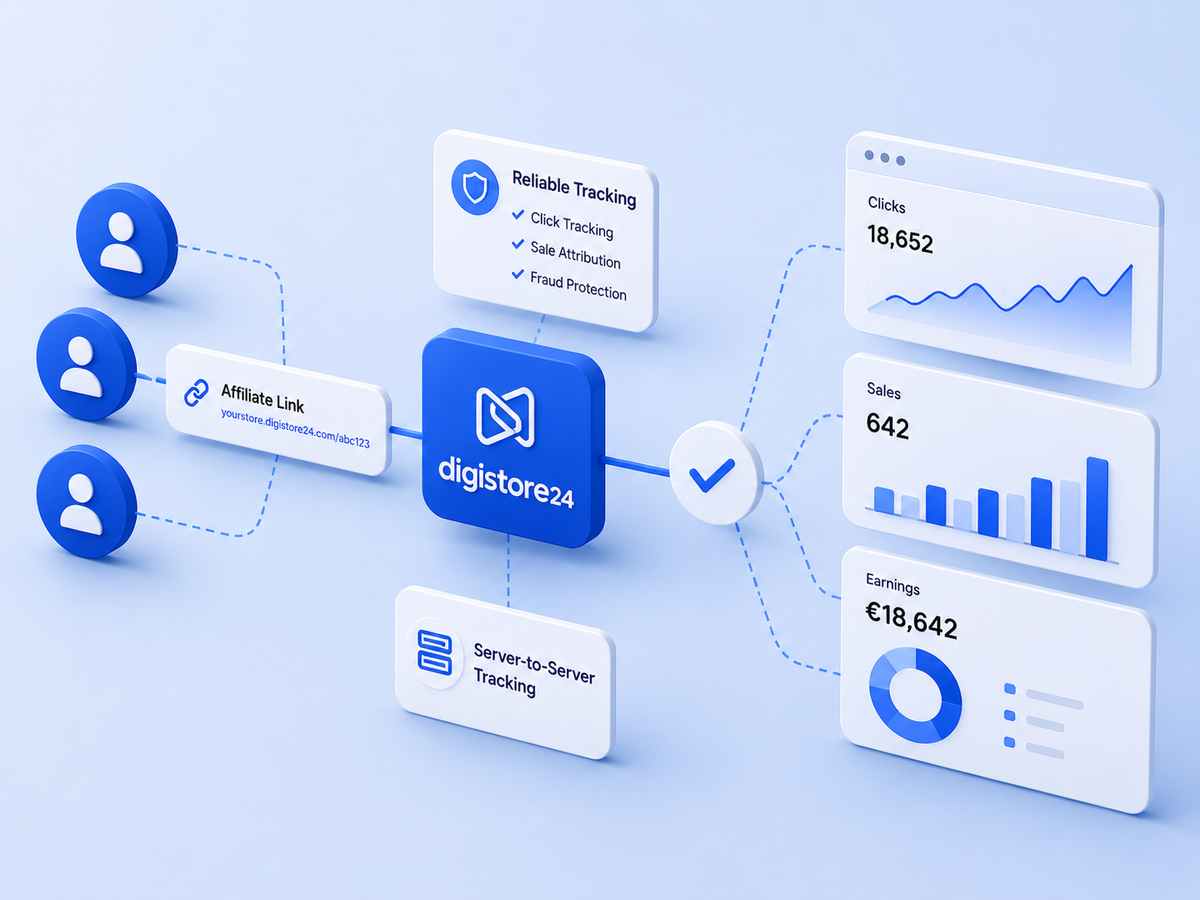
This is the one that bit me. If your affiliates don't trust that their sales are being tracked accurately, they'll stop promoting you. And they won't tell you why — they'll just quietly move on to a program that works.
What I learned: basic cookie tracking isn't enough anymore. Browsers block cookies. People switch devices. Sales happen days or weeks after the initial click.
Server-to-server (S2S) tracking sends data directly between servers, bypassing the browser entirely. It's more accurate and isn't affected by ad blockers or cookie restrictions. This is what Digistore24 uses, and it's one of the main reasons we're moving our program there.
Also: give affiliates visibility into their own data. They should be able to log in and see their clicks, conversions, and earnings in real time. If they have to email you to find out if something converted, you've already lost them.
Step 6: Pay your affiliates reliably and automatically
This sounds obvious. It's not.
When I was manually processing payouts through First Promoter, I realized how easy it is for this to slip. You get busy. You're traveling. You forget. And now your affiliates — the people actively driving revenue for your business — are waiting for money they've already earned.
Automated payouts aren't a luxury, but on Digistore24, payouts happen up to three times a week with no minimum threshold. The platform handles it automatically. You don't have to remember, you don't have to log in, and your affiliates don't have to chase you.
As Francis Wolff, CEO of Digistore24 USA, puts it: "The biggest thing we do is we let entrepreneurs focus on what they're good at." For me, that means creating products and content — not processing payment spreadsheets.
Step 7: Treat it like a relationship, not a channel
The best affiliate programs I've ever been part of — the ones where I actively promote and keep promoting — are the ones where someone on the other end actually communicates with me.
That means:
- Let affiliates know when something new is launching (give them advance notice so they can plan content)
- Share what's working ("Our top affiliates are seeing the best conversions with email sequences targeting X audience")
- Be available when they have questions
- Celebrate wins — even a simple "hey, you drove 50 sales this month, thank you" goes a long way
As your program grows, this is where having a dedicated account manager matters. On Digistore24, account managers build relationships with both vendors and affiliates — they know who's good at promoting what, and they can connect you with affiliates who are the right fit for your product.
Luigi Florimo, Director of Affiliate Sales at Digistore24, describes the vision: "Our goal should be to partner with real companies that have internal operations and their own traffic." That's the kind of affiliate relationship that lasts — not a transactional link exchange, but a real partnership.
The Short Version
Setting up an affiliate program is easy. Managing one well is harder than it looks — especially when you're doing it yourself with standalone tools.
The things that matter most: competitive commissions, reliable tracking, automated payouts, real materials for your affiliates, and treating the relationship like a partnership.
If I were starting over today, I'd skip the standalone software and go straight to a platform that handles the operational pieces so I can focus on the product and the relationships. That's exactly what we're doing with Pagewheel this summer.
FAQ
How much does it cost to set up an affiliate program?
It depends on your platform. Standalone tools like First Promoter charge monthly fees ($49–$149+/month) based on revenue caps — and you pay whether your affiliates are generating sales or not. Digistore24 charges no monthly fee — they take a percentage of each transaction (7.9% + $1), which covers payment processing, tax compliance, affiliate payouts, and tracking. You pay nothing until you make a sale.
What commission rate should I offer affiliates?
For digital products: 40–70%. For SaaS: 20–40% recurring. For physical products: 10–20%. The key is making the math work for both sides — the commission needs to justify the effort of creating content, and the margin needs to be sustainable for your business.
How do I find affiliates for my program?
Start with your existing customers. List on a marketplace (Digistore24 has 100,000+ active affiliates). Do targeted outreach to content creators in your niche. And make your program easy to join — the fewer barriers, the more affiliates you'll attract.
What's the difference between a Merchant of Record and regular affiliate software?
Regular affiliate software (First Promoter, Rewardful) handles tracking and reporting — but you still manage payments, taxes, and compliance yourself. A Merchant of Record (like Digistore24) handles everything: payment processing, tax collection, VAT compliance, refunds, and automated affiliate payouts. You focus on the product; they handle the operations.
Do I need to pay affiliates manually?
With standalone tools, often yes. With a Merchant of Record platform like Digistore24, payouts are automated — up to three times per week with no minimum threshold. Your affiliates get paid without you lifting a finger.