My First 15 Years in Business Were One Long String of Failures
I want to be upfront about something: I did not wake up one morning and launch a successful online business. I spent fifteen years failing. Multiple ventures. Multiple pivots. Multiple moments where I almost convinced myself that entrepreneurship just was not for me.
But I kept a rule through all of it: fail fast, fail small, and get through the failures quickly so you can reach the breakthroughs faster. I call it the framework of "failing small." The goal is not to avoid failure — it is to iterate through one hundred failures on your way to success before the clock runs out.
That mindset is what made the difference when COVID hit in 2020 and my motivational speaking business went to zero overnight.
The COVID Pivot That Changed Everything
When every in-person event disappeared, I had a choice: feel sorry for myself or find the next door. I chose the next door. I had been teaching investment strategies and financial literacy in live settings, so I asked myself: what if I took that to YouTube?
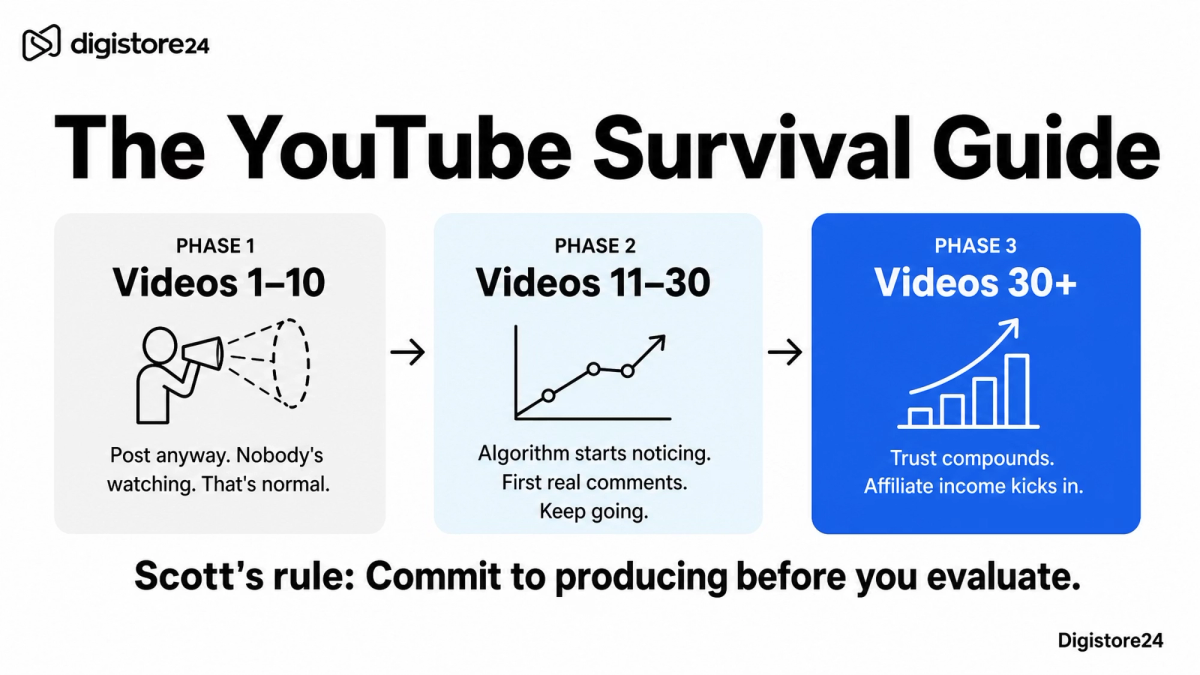
What followed was three to four months of working on three to four hours of sleep per night. I am not recommending that as a sustainable lifestyle, but I want to be honest about what the launch phase looked like. Building an audience from scratch on YouTube is brutal. The algorithm essentially ignores your first ten videos. You have to commit to producing content before you see any meaningful return — and most people quit before they ever reach that inflection point.
I did not quit.
The Numbers That Surprised Me Most
Here is where the story gets interesting for anyone building a digital product business. In month two of my YouTube channel, I made $5,000 in total revenue. But here is the part most people get wrong about YouTube: ad revenue was only $500 of that. The other $4,500 came from affiliate income — commissions from recommending investment tools and financial products I genuinely used and believed in.
That ratio matters. If you are building a content-based business and you are relying entirely on platform ad revenue, you are leaving most of your income on the table. The real money in content is what you layer on top — affiliate offers, courses, memberships, and digital products that your audience is already interested in because they trust you.
For anyone running affiliate programs or selling digital products on platforms like Digistore24, this is the insight worth underscoring: content is not just a marketing channel. For the right creator, content is the revenue engine itself.
"You're paid based on the value you provide."
— Scott Curry
From One-Time Sales to $25,000 Per Month
Affiliate income was a strong start. But one-time commissions have a ceiling unless you are constantly generating new traffic and new conversions. That ceiling became obvious to me within a few months, and I started thinking about the problem differently.
The shift was from transactional income to recurring income. Instead of earning a commission every time someone bought a product, I wanted to build a model where the value I created kept compounding month over month. That led me to memberships.
My membership program grew to $25,000 per month in recurring revenue. Not because I discovered some secret hack, but because I built something people wanted to stay inside. The content inside the membership answered the same question my YouTube videos raised: "This sounds interesting — but how do I actually do it?"
For digital product sellers and course creators, this is worth sitting with. A membership is not just a pricing model. It is a retention model. Your free content attracts people who are curious. Your paid membership serves people who are committed. The transition from curious to committed is exactly where your revenue lives.
Why YouTube Is Harder Than Other Platforms — and Why That's Good
I made a choice early on to build on YouTube instead of shorter-form platforms. That choice was deliberate, and it came down to one insight: YouTube is harder, which means fewer people stick it out, which means the ones who do have less competition.
Every platform eventually rewards the people who commit to it long enough to figure it out. YouTube's barrier is time and patience. Short-form platforms have a lower barrier, which means a more crowded space and faster follower churn.
As a digital product seller or affiliate marketer, you want to build on platforms where the audience you attract has shown they are willing to invest time. A person who watches a 20-minute YouTube video about investing has already self-selected as a serious prospect. That viewer is far more likely to click an affiliate link or join a membership than someone who swiped past a 15-second clip.
This is why I invest in depth over volume. My content answers real questions in real detail. That is what builds trust, and trust is what converts.
The Story Behind FaithRoar's Mission
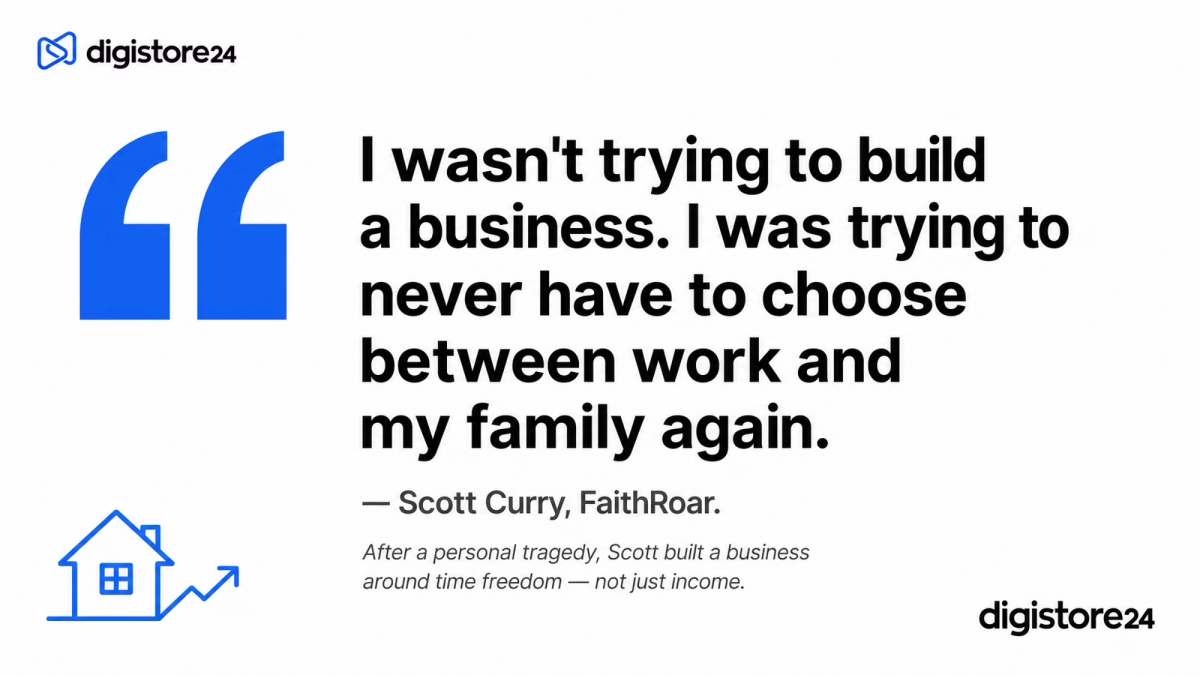
There is a reason my business carries the name FaithRoar and why my stated mission is to help a million people achieve financial freedom. It is not marketing language. It came from a personal tragedy that I will not describe in full detail here, but that fundamentally changed what I was building and why.
The short version: I heard a story about a mother who, on her deathbed, said her one regret was that she never had enough time with her children because work always came first. That story hit me in a way I could not shake. I had been building businesses for years, but I had not fully connected my work to what financial freedom actually means in a human life — the ability to choose your family over your job when it matters most.
That reframe changed my marketing, my content, and my product strategy. I stopped building for revenue and started building for transformation. And paradoxically, the revenue followed.
Practical Takeaways for Digital Product Sellers
If you are building a digital product business — whether that is a course, a membership, a software tool, or an affiliate-driven content brand — Scott Curry's journey offers a clear set of lessons that apply regardless of niche:
Start building before you are ready. Scott launched his YouTube channel in the middle of a crisis with no guarantee it would work. Waiting for the perfect moment is how creators stall for years before taking the first step.
Stack your revenue streams deliberately. Ad revenue, affiliate income, and memberships serve different purposes. Platform ad revenue is a lagging indicator of audience size. Affiliate income rewards trust. Memberships build compounding relationships. Build all three, but understand which one is your foundation.
The first ten pieces of content are a rite of passage, not a results window. The algorithm, the audience, and your own skill all need time to calibrate. Commit to producing before you evaluate.
Make value creation your competitive moat. It is exceptionally rare to find someone who both knows something deeply and can teach it clearly. If you can do both, you have a durable advantage over every AI-generated content piece and every surface-level competitor.
Recurring revenue changes your relationship with your business. When your income resets to zero every month, you stay in survival mode. When it compounds month over month, you get to think strategically.
Build a Business That Buys Back Your Time
The question at the center of Scott Curry's work is not how to make more money — it is how to build something that gives you time back. For most digital product sellers, that is the real goal behind the goal.
Whether you are launching your first affiliate campaign, scaling a course catalog, or building the infrastructure to support a growing membership community, the framework is the same: deliver genuine value to many people, build systems that reward loyalty, and let the math do the rest.
If this story resonated with you, listen to the full episode on Unscripted Small Business: From Failed Ventures to Financial Freedom & Faith with Scott Curry. And if you are ready to explore tools that help you sell digital products and manage affiliate relationships at scale, FaithRoar is a strong example of what a trust-first content business looks like in practice.
The income is real. The path is hard. The results are worth it.
This post is adapted from Scott Curry's appearance on the Unscripted Small Business podcast, episode: From Failed Ventures to Financial Freedom & Faith with Scott Curry.